
The moment I truly fell in love with Japanese street food was not at a famous market or a Michelin-recommended stall. It was at a tiny takoyaki stand on a side street in Osaka’s Namba district, where a woman who must have been in her seventies was flipping octopus balls with the speed and precision of a surgeon. She handed me a boat of six perfectly crispy, molten-centered takoyaki, drizzled with sauce and dancing bonito flakes, for 500 yen. I burned the roof of my mouth so badly I could not taste anything for two days. Absolutely worth it.
Japan’s street food markets are not like night markets in Southeast Asia or Taiwan. They tend to be more orderly, more specialized, and often embedded in covered shopping arcades or historic market streets that have been feeding locals for generations. The vendors are often family businesses passed down through multiple generations, and the specialization is intense. One stall might sell only tamagoyaki, perfected over 50 years. Another does nothing but pickles. Each market has its own personality, its own must-try items, and its own rhythm. Here is my guide to the best ones across Japan’s three biggest cities.
Dotonbori, Osaka: The Street Food Capital
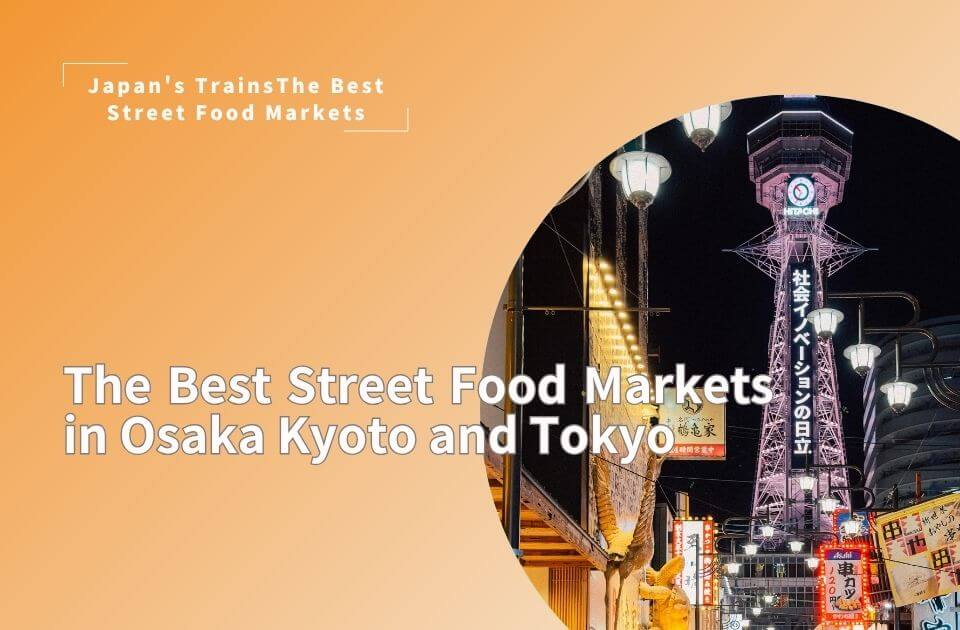
If there is one place that fully embraces “kuidaore” (eat until you drop), it is Dotonbori. This neon-lit strip along the Dotonbori Canal is arguably the most famous food street in Japan. The energy is infectious, the signage absurdly over-the-top (look for the giant mechanical crab and the Glico running man), and the food phenomenal.
Takoyaki: Wanaka, on the south side near Hozenji Yokocho, is a local favorite with 8 pieces from 550 yen. Their takoyaki has a slightly creamy interior. Kukuru near the canal bridge uses larger octopus pieces (8 from 600 yen).
Okonomiyaki: Mizuno, on the main strip (open since 1945), makes what many locals consider the best in the neighborhood. Their yamaimo-yaki (mountain yam version for extra fluffiness) is about 1,490 yen. Expect a line.
Kushikatsu: Daruma, with its angry-faced mascot, has multiple Dotonbori locations. Individual skewers run 120 to 250 yen. The golden rule: never double-dip in the communal sauce. They are serious about this.
Gyoza: While Dotonbori is not specifically famous for gyoza, several stalls sell them fresh off the griddle. Look for the tiny spots where you can see the chef pressing dumplings by hand. A plate of 6 usually runs 350 to 500 yen, and the crispy bottom and juicy filling are consistently good across the board.
Best time: Late afternoon (4:00 PM onward) for the full atmosphere with the neon signs blazing and the crowds buzzing. Weekday evenings are noticeably less packed than weekends. If you come at lunchtime, the stalls are open but the famous Dotonbori energy has not quite kicked in yet.
Kuromon Market, Osaka: The Kitchen of Osaka
A 10-minute walk south of Dotonbori (nearest station: Nippombashi on the Osaka Metro), Kuromon is a 600-meter covered arcade that has been Osaka’s primary fresh food market since 1822.
Seafood: Grilled scallops (400 to 600 yen), sea urchin (500 to 1,000 yen), and enormous grilled king crab legs (1,500 to 3,000 yen). Maguroya Kurogin does excellent fresh tuna sashimi sets from around 1,000 yen.
Japanese strawberries: Varieties like amaou and benihoppe in winter through spring, small packs from 500 to 800 yen. Sweeter and more fragrant than anything at home.
Dashimaki tamago: Thick, juicy, dashi-infused rolled omelets made to order, 300 to 500 yen. Eat them hot.
Best time: 9:00 to 11:00 AM for freshest selection and thinnest crowds. Many stalls close by 5:00 PM.
Nishiki Market, Kyoto: Five Blocks of Kyoto Flavor
Nishiki runs along a narrow covered arcade in central Kyoto, stretching about 390 meters from Takakura to Teramachi. It has been “Kyoto’s Kitchen” for over 400 years. While more touristy now, the quality remains high and many vendors are multi-generational family businesses.
Tsukemono (pickles): Many stalls offer free samples. Uchida, one of the oldest pickle shops, has an astounding seasonal variety. Small bags cost 400 to 800 yen.
Mitarashi dango: Konnamonja, near the middle of the market, makes grilled rice dumplings with sweet soy glaze for 350 yen.
Tamago-yaki on a stick: One of Nishiki’s most iconic foods, 200 to 350 yen depending on size. Look for the stall with the longest line.
Fresh yuba (tofu skin): A Kyoto specialty. Yubahan sells tasting portions with soy sauce for around 500 yen.
Best time: 10:00 AM to noon on weekdays. Weekends from 11:00 AM to 3:00 PM get very congested.
Important etiquette: Kyoto has been cracking down on “tabearuki” (eating while walking) in crowded areas. Many Nishiki vendors now provide standing-eat areas. Please use them rather than wandering the narrow arcade with food in hand.
Tsukiji Outer Market, Tokyo: Still the Seafood King
When the wholesale fish market moved to Toyosu in 2018, many assumed Tsukiji was finished. They were wrong. The outer market (Jogai Shijo) is still one of Tokyo’s best eating destinations, a 5-minute walk from Tsukiji Station on the Hibiya Line, with roughly 400 shops and stalls in a dense grid of lanes.
Tamagoyaki: From Tsukiji Yamacho or Shouro, these sweet, jiggly omelets on a stick cost 100 to 200 yen. The perfect first bite.
Sushi: Sushi Dai and Daiwa Sushi are most famous (2 to 3 hour waits). For excellent sushi without the queue, try Tsukiji Sushi Say (omakase from 3,500 yen) or walk-up counters like Sushikuni (nigiri sets 2,000 to 3,000 yen).
Grilled seafood skewers: Unagi, scallop, and shrimp skewers for 300 to 800 yen each. Buy a few, eat standing, move on.
Wagyu croquettes: From Yoshizawa, a legendary butcher that has been operating here for decades. Golden, crispy, with intensely beefy filling, 200 to 300 yen each. Get two. You will want to come back for a third.
Fresh fruit sandwiches: Several shops near the market sell fruit sando, thick white bread filled with whipped cream and immaculate seasonal fruit. They are typically 500 to 800 yen and make an excellent breakfast or dessert alongside your savory market grazing.
Best time: 7:00 to 9:00 AM for freshest items and authentic atmosphere. Many places open at 5:00 or 6:00 AM. By 2:00 PM, many begin closing.
Ameyoko, Tokyo: The Bargain Hunter’s Food Alley
Ameyoko is a bustling open-air market running alongside the JR tracks between Ueno and Okachimachi stations. Born as a postwar black market, it evolved into a food and discount shopping strip with scrappy, chaotic energy entirely different from polished Tokyo.
Kebabs and international food: Turkish doner kebab wraps for 500 to 700 yen line the main strip, reflecting the area’s multicultural character.
Fresh fruit cups: Cut mango, pineapple, and melon for 300 to 500 yen. Perfect on a hot day.
Seafood stalls: Near the Okachimachi end, find sashimi trays, grilled shellfish, and raw oysters at prices well below restaurant rates. Quality sashimi trays for 1,000 yen are common.
Nikuno Ohyama: A standing bar just off the main strip serving yakiniku-style grilled wagyu at standing counters. A plate of quality wagyu starts around 700 yen, beer from 300 yen. It is standing room only, casual, loud, and excellent. This is where Ueno locals go after work, and the vibe is fantastic.
Chocolate and candy shops: Bins of mixed chocolates and traditional Japanese dagashi (penny candy) are fun to browse and cheap. You can often fill a bag for 500 yen, making them perfect affordable souvenirs.
Best time: Weekday afternoons for a relaxed browse, weekends for the full energy. Liveliest from 11:00 AM to 6:00 PM.
Teramachi and Beyond, Kyoto
Teramachi Street runs perpendicular to Nishiki Market. The northern section and connecting streets hide excellent finds.
Ippodo Tea: On Teramachi north of Nijo, operating since 1717. Their tasting room serves matcha and gyokuro sets from 660 yen. Buy a tin of hojicha (from 800 yen) as a souvenir.
Demachi Masugata Shotengai: A covered market near Demachi-Yanagi Station, about 15 minutes north. Mame Mochi Hompo sells famous bean-filled rice cakes for 200 yen each. Completely off the tourist track.
Practical Tips for Market Visits
Carry cash. Many stalls are cash only. Keep 3,000 to 5,000 yen in small bills and coins.
Bring a small bag for trash. Japan has very few public bins. Convenience stores are the easiest place to dispose of trash.
Go hungry and pace yourself. Walk the entire market first to see what is available, then go back for the best items. Your stomach has limited capacity.
Ask for recommendations. A simple “osusume wa?” (what do you recommend?) works at any stall. Even without common language, pointing and smiling gets you far.
Eat seasonal. The best vendors change offerings with the seasons: grilled mochi in winter, fresh uni in spring, shaved ice in summer, roasted chestnuts in autumn.
Japan’s street food markets are living food ecosystems where people have been shopping and eating for generations. When you buy takoyaki from a grandmother in Osaka or sashimi from a fishmonger at Tsukiji, you are participating in a food culture stretching back centuries. Put the diet on hold, bring your appetite, and eat your way through as many of these markets as your trip allows.
Follow Japan is your insider guide to experiencing Japan like a local. Follow @followjapan_fj on Instagram for daily Japan travel tips and hidden gems.


