
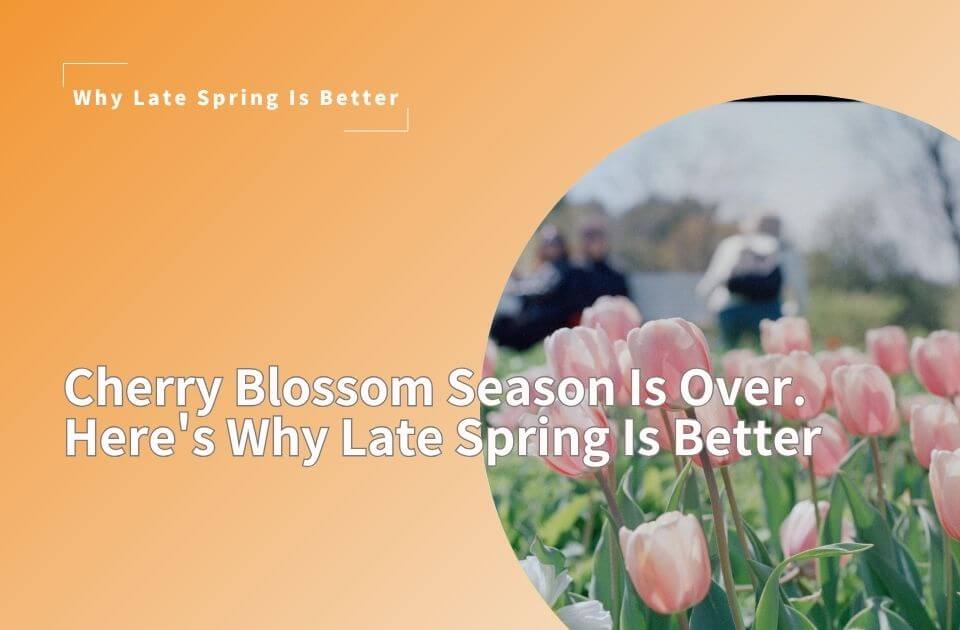
Every spring, the internet loses its collective mind over cherry blossoms in Japan. Instagram fills up with pink petals, flight prices spike by 40 percent, hotels in Kyoto sell out months in advance, and millions of tourists descend on the same handful of parks during the same two-week window. I get it. Cherry blossoms are beautiful. I have lived through several sakura seasons here, and every time, I am still stopped in my tracks by a perfect tree.
But here is something I have been wanting to say for a while: the weeks after cherry blossom season are better. May and June in Japan are quieter, cheaper, warmer (but not yet brutal), and honestly more beautiful in many ways. The country is draped in fresh green, wisteria drips from ancient trellises in purple waterfalls, hydrangeas bloom by the thousands, and fireflies light up riverbeds at night.
Let me tell you why late spring is my favorite time to explore Japan.
The Crowds Disappear and Prices Drop
Cherry blossom season, roughly late March through mid-April, is one of the most expensive times to visit. During peak sakura in 2025, a standard hotel room in central Kyoto averaged 35,000 to 45,000 yen per night. That same room in mid-May? More like 15,000 to 22,000 yen. Flights from North America and Europe follow a similar pattern, with May fares often 20 to 30 percent lower.
Crowd levels drop even more dramatically. Fushimi Inari, which sees an estimated 30,000 visitors daily during sakura, becomes manageable by May. Arashiyama’s Bamboo Grove settles into something approaching peaceful by mid-May.
The difference at popular restaurants is just as stark. During cherry blossom peak, expect 60 to 90 minute waits at popular spots in Gion and Pontocho. By mid-May, you can often walk in and sit down. The same goes for popular sushi restaurants near Tsukiji, ramen shops in Shinjuku, and the famous breakfast spots in Nara.
A note on Golden Week: April 29 to May 5 is a major Japanese holiday, so domestic tourism peaks during those days. Avoid that window if you can. But from May 8 onward, Japan enters a sweet spot of pleasant weather and blissfully low tourist numbers that lasts until mid-July.
Wisteria Season Is Stunningly Beautiful
If you think cherry blossoms are Japan’s most photogenic flower, you have not seen wisteria. These cascading clusters of purple, white, and pink create something from a fantasy novel. Wisteria season runs from mid-April through late May.
The most famous spot is Ashikaga Flower Park in Tochigi Prefecture, about 90 minutes north of Tokyo. Their Great Wisteria is over 160 years old, covering roughly 1,000 square meters. The Wisteria Festival runs from mid-April through mid-May, with illuminated nighttime viewing. Admission is 1,800 to 2,200 yen (varies by bloom status), and the park is a short walk from Ashikaga Flower Park Station on the JR Ryomo Line.
Closer alternatives: Byodoin Temple in Uji has beautiful wisteria alongside its famous Phoenix Hall. Kasuga Taisha Shrine in Nara features a Wisteria Garden (200 yen) blooming in late April to early May. In Tokyo, Kameido Tenjin Shrine in Koto Ward has spectacular free wisteria arbors. Kawachi Wisteria Garden in Kitakyushu offers a famous tunnel of blooms (advance tickets required, 1,500 to 2,000 yen).
Fresh Green Momiji: Autumn Colors in Reverse
Everyone knows about autumn maple leaves in Japan. But “shinryoku” (fresh green) season, when those same trees are covered in luminous green leaves, is one of Japan’s most underrated spectacles. The light filtering through fresh green momiji in May creates a glow that feels supernatural.
Every famous autumn spot becomes a green paradise. Tofukuji Temple in Kyoto, mobbed with 400,000 visitors during November, is quiet and serene in May when the same valley of 2,000 maples is a sea of electric green. Garden admission is 500 yen, without the queues. Eikando Temple (600 yen) is equally transformed.
In Tokyo, Rikugien Gardens (300 yen, near Komagome Station on the Yamanote Line) and Koishikawa Korakuen (300 yen, next to Tokyo Dome) are exceptional. Nikko, about two hours north of Tokyo, is at its absolute best in May, with vibrant forests around Toshogu Shrine and the waterfalls of Okunikko.
New Tea Season: Shincha Is a Revelation
May is the month for tea lovers. Shincha (new tea) season begins with the first harvest, traditionally around the 88th day after the start of spring, usually early May. This first flush of green tea is prized for its fresh, sweet, vibrant flavor.
Uji, between Kyoto and Nara, is one of Japan’s most prestigious tea regions. Nakamura Tokichi, a tea house operating since 1859, offers seasonal shincha tasting sets and their famous matcha parfait (around 1,400 yen). Tsuen Tea, claiming to be Japan’s oldest tea shop (founded 1160), also features shincha specials.
Shizuoka Prefecture, producing about 40 percent of Japan’s tea, offers tea picking experiences throughout May near Makinohara and Kakegawa for 2,000 to 4,000 yen. Even without visiting a tea region, you will find shincha at convenience stores and department store food halls in May. A bag of quality shincha from a specialty shop runs 1,000 to 3,000 yen and makes an excellent souvenir.
Firefly Season: Nature’s Light Show in June
This is one of Japan’s best-kept secrets among foreign tourists. From late May through mid-June, fireflies emerge along rivers and streams across Japan. Watching them is called “hotarugari” (firefly hunting), and it is a beloved tradition.
You stand beside a dark river on a warm evening, and slowly, tiny green lights begin blinking. Within minutes, you are surrounded by hundreds. Unlike fireworks, firefly viewing is completely silent. It is one of the most peaceful experiences Japan has to offer.
Kibune, about 30 minutes north of central Kyoto, is one of the Kansai region’s best spots. The Kibune River hosts fireflies from early to mid-June, and several restaurants offer “kawadoko” (riverside dining platforms) where you can eat while watching. Philosophy’s Walk in Kyoto, which was packed with sakura tourists two months earlier, becomes a quiet, magical evening firefly walk in early June. In Tokyo, Hotel Chinzanso maintains a private garden with cultivated fireflies, available to restaurant guests during the season.
Hydrangea Season Turns Temples Into Dreamscapes
Ajisai (hydrangea) season runs from early June through mid-July. The sheer volume at the best spots is staggering.
Meigetsuin Temple in Kamakura (the “Hydrangea Temple”) is the most famous, with thousands of blue hydrangeas along a hillside path. It is a 10-minute walk from Kita-Kamakura Station on the JR Yokosuka Line, 500 yen admission. Best viewing is usually the first two weeks of June. Get there early, as lines form by 9:00 AM on weekends.
Hasedera Temple, also in Kamakura, has over 2,500 hydrangeas on terraced gardens with ocean views (400 yen). In Kyoto, Mimurotoji Temple (bus from Uji Station) features 20,000 hydrangea plants of 50 varieties (1,000 yen during season). Sanzenin Temple in Ohara (700 yen) combines hydrangeas with moss gardens. In Tokyo, Hakusan Shrine’s free Bunkyo Hydrangea Festival in June features about 3,000 plants.
Summer Festivals Start Earlier Than You Think
Many tourists associate Japanese festivals with July and August, but several begin in May and June.
Kyoto’s Aoi Matsuri (Hollyhock Festival) takes place on May 15 every year. A procession of 500 people in Heian-era court costumes walks from the Imperial Palace to Kamigamo Shrine. Free viewing along the route, or paid seating for about 2,500 yen.
The Sanno Matsuri at Hie Shrine in Tokyo is one of Tokyo’s three great festivals, held in mid-June in even-numbered years (2026 qualifies). The grand procession features 300 participants in Heian-period costumes through the streets of Akasaka. In Osaka, the Aizen Matsuri at Aizen-do Temple in late June is considered the first summer festival of the season.
Practical Tips for a Late Spring Visit
Weather: May averages 20 to 25 degrees Celsius in Tokyo and Kyoto with low humidity. June brings the rainy season (tsuyu), starting around June 7 in Kansai. The rain comes in waves with dry days in between. Pack a compact umbrella and light rain jacket.
Booking advantage: Hotels and ryokans fully booked for sakura often have wide-open availability in mid-May through June. Premium rooms at places like Hakone, Kinosaki Onsen, and Kurokawa Onsen can be 30 to 50 percent less than peak rates.
Seasonal dining: Hamo (pike eel), a Kyoto delicacy, starts appearing on menus. Ayu (sweetfish) season begins in June, with river-grilled ayu available throughout the countryside.
What to pack: Light layers for May, with a waterproof outer layer for June. Comfortable walking shoes that handle wet pavement. A small towel, because Japanese people carry these year-round and you will understand why once the humidity arrives.
Cherry blossom season is wonderful, and if your heart is set on sakura, you should absolutely come for it. But if your schedule is flexible, or if you missed the sakura window and feel like you lost your chance at a great spring trip, let me assure you: you have not. The Japan that exists from May through June is lush, uncrowded, affordable, and full of seasonal beauty most tourists never see. Book the trip. The wisteria, the fireflies, and the fresh green mountains are waiting.
Follow Japan is your insider guide to experiencing Japan like a local. Follow @followjapan_fj on Instagram for daily Japan travel tips and hidden gems.


