
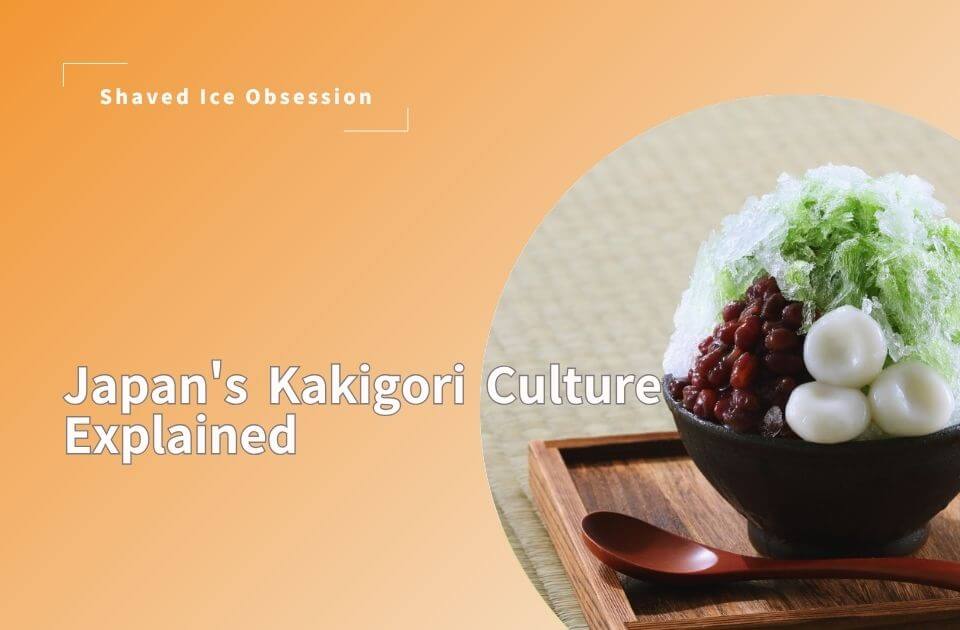
The first time someone placed a bowl of kakigori in front of me, I almost laughed. It was an enormous, gravity-defying mountain of shaved ice, dusted with what looked like fresh snow, drizzled with syrup that seemed to glow, and topped with mochi and fruit. It cost 1,200 yen. For ice. I thought it was absurd.
Then I took the first bite, and I understood everything.
Japanese kakigori is not a snow cone. It is not a slushie. It is not whatever sad imitation of shaved ice you might have encountered at a county fair or a beach stand. Kakigori is a legitimate culinary art form in Japan, and once you understand the difference, you will never look at frozen desserts the same way.
What Makes Japanese Kakigori Different
The secret is the ice. Premium kakigori shops use what is called tennen gori, naturally frozen ice that forms slowly over winter in clean mountain ponds, or they use specially purified water frozen extremely slowly in professional machines. Slow freezing creates ice with a very fine crystal structure, and when that ice is shaved on a sharp blade, it produces flakes so thin they are almost translucent. The texture is closer to fresh powder snow than to anything you would call “ice.”
This is why good kakigori does not give you brain freeze. The ice is so fine and airy that it melts instantly on your tongue rather than hitting your palate as a solid chunk of cold. I was skeptical about this until I timed myself eating a full bowl at Shimura in Tokyo’s Akabane neighborhood and realized I had consumed it in about three minutes with zero discomfort. The same volume of regular shaved ice would have been a headache nightmare.
The other difference is the toppings. While budget kakigori at festival stalls uses brightly colored corn syrup (still delicious, no shame), the specialty shops use fresh fruit syrups, house-made condensed milk, matcha from Uji, handmade an (sweet red bean paste), and seasonal ingredients that change throughout summer.
The History Nobody Tells You
Kakigori is not a modern invention. It shows up in “The Pillow Book” by Sei Shonagon, written over a thousand years ago during the Heian period. She describes shaved ice with sweet vine syrup served in a metal bowl as an elegant thing. In the Heian court, ice was harvested in winter and stored in special ice houses called himuro, and having shaved ice in summer was a luxury reserved for the aristocracy.
The democratization of kakigori happened in the Meiji period when ice became commercially available. By the early 1900s, kakigori stalls were a common summer sight. The flag you see outside kakigori shops, a white flag with the character for “ice” (koori) written in red, dates back to this era and is one of the most recognizable symbols of Japanese summer.
Where to Eat the Best Kakigori in Japan
I have eaten an embarrassing amount of kakigori over my years in Japan. Here are the places I keep going back to.
Tokyo
Shimura in Akabane has been serving kakigori since 1916 and is widely considered one of the best in Tokyo. Their specialty is using natural ice from Nikko’s Lake Chuzenji. The menu changes seasonally, but the ichigo (strawberry) with condensed milk is a classic at about 1,000 to 1,500 yen. The shop is a short walk from JR Akabane Station, and the line in summer can stretch down the block. Go on a weekday and arrive when they open.
Yelo in Roppongi is a modern kakigori bar that serves until late at night, which is unusual for a kakigori shop. Their espresso kakigori is outstanding, a mountain of fine ice with bitter espresso syrup and sweetened condensed milk, for about 1,200 yen. It is a five-minute walk from Roppongi Station.
Himitsudo in Yanaka is another legendary shop with lines that test your patience and reward your taste buds. They use natural ice and their fruit syrups are made entirely in-house. The mango kakigori (about 1,300 yen) during peak mango season is worth waiting an hour for. I know because I have done it twice.
Kyoto
Nishiki Housenkyo, just off Nishiki Market, serves kakigori with distinctly Kyoto flavors. Their matcha kakigori uses high-grade Uji matcha and comes with shiratama mochi and sweet bean paste for about 1,400 yen. Sitting inside this traditional machiya townhouse while eating perfect shaved ice is a sensory experience that captures everything good about Kyoto summers.
Saryo Suisen in the Higashiyama area near Kiyomizu-dera has seasonal kakigori that is as beautiful as it is delicious. Their peach kakigori, available in summer, uses whole slices of ripe peach arranged like petals and costs about 1,500 yen. The presentation alone is worth the visit.
Osaka
Kakigori-ya Honpo Dotonbori branch in Osaka serves massive portions at reasonable prices. Their kinako (roasted soybean flour) kakigori with kuromitsu (black sugar syrup) is a brilliant combination of nutty and sweet for about 900 yen. It is right in the Dotonbori entertainment district, making it a perfect stop during a summer evening walk.
Nagatoro, Saitama
If you want to make a day trip out of your kakigori quest, Nagatoro is a small town in Saitama Prefecture known for its natural ice. Asami Reizo, the ice company here, has been harvesting natural ice from the Arakawa River area since the Meiji era. Several shops in town serve kakigori made with their ice. The most famous is Asami Reizo’s own shop, where a bowl of their signature kakigori costs about 800 to 1,500 yen depending on the flavor.
Nagatoro is about 90 minutes from Ikebukuro Station in Tokyo via the Seibu and Chichibu Railways (about 1,500 yen). The town is also beautiful, with river gorges and hiking trails, so you can make a full day of it.
Festival Kakigori vs. Artisan Kakigori
I want to say something in defense of cheap kakigori. The fancy artisan stuff is incredible, no doubt. But there is something deeply satisfying about the 300-yen festival kakigori you get from a yatai stall at a summer matsuri. It is machine-shaved ice with neon-bright melon or strawberry or Blue Hawaii syrup poured over it, served in a styrofoam cup with a flat wooden spoon.
Is it the same as a 1,500-yen natural ice creation from a century-old shop? Of course not. But eating it while standing in a crowd watching fireworks with syrup dripping down your hand is one of the most Japanese summer experiences you can have. Do not be a snob about kakigori. Enjoy both ends of the spectrum.
The Blue Hawaii flavor, by the way, is a mystery that nobody can fully explain. It is vaguely tropical, somewhere between citrus and berry, dyed an electric blue that stains your tongue. It does not exist as a natural fruit. It just is. And it is delicious. Every Japanese person I have asked about Blue Hawaii flavor just shrugs and says “it tastes like Blue Hawaii.” Accept the mystery.
How to Eat Kakigori Properly
There is a technique to eating kakigori that took me a summer to figure out. First, do not dig from the top down. The syrup and toppings concentrate near the top, so if you eat straight down, you end up with flavorless ice at the bottom. Instead, gently break into the side and mix as you go, pulling the flavored portions down into the plain ice.
Second, eat at a steady pace. Kakigori melts fast, especially in the summer heat, and a beautiful mountain of shaved ice can turn into a puddle of colored water in about 10 minutes if you dawdle. This is not something to savor slowly. Commit to it.
Third, many shops offer refills of syrup for free or for a small charge (usually 100 to 200 yen). If your ice-to-flavor ratio gets unbalanced, do not suffer in silence. Ask for more syrup. In Japanese, you can say “shiroppu okawari dekimasu ka?” (Can I get a syrup refill?).
The Kakigori Season
Kakigori season in Japan roughly runs from May through September, with the peak being July and August. Many specialty shops only open for the summer months and close for the rest of the year, so timing matters.
That said, some shops have started serving kakigori year-round as the trend has grown. In Tokyo, shops like Yelo and a few others stay open in winter, and there is something wonderfully contrarian about eating shaved ice when it is cold outside.
A recent trend that I have noticed growing is kakigori with savory elements. Some shops now offer kakigori with cheese, herbs, or even dashi-based syrups. I tried a tomato and basil kakigori at a shop in Shimokitazawa last summer and it was surprisingly excellent. The creativity in the kakigori world is accelerating, and every summer brings new flavor combinations that push the boundaries.
The Bottom Line
Kakigori is one of those things that sounds trivial until you experience it done right. It is ice. It is syrup. It should not be capable of moving you. But when you sit down in a century-old shop on a day so hot you cannot think, and someone places a perfect, towering mountain of snow-fine ice in front of you, topped with fruit that was probably picked that morning, something clicks. You understand why an eleventh-century court lady wrote about this in her diary. You understand why people line up for an hour. You understand why there is an entire culture built around frozen water.
Find a shop, join the line, and take that first bite. Welcome to the obsession.
Follow Japan is your insider guide to experiencing Japan like a local. Follow @followjapan_fj on Instagram for daily Japan travel tips and hidden gems.


