
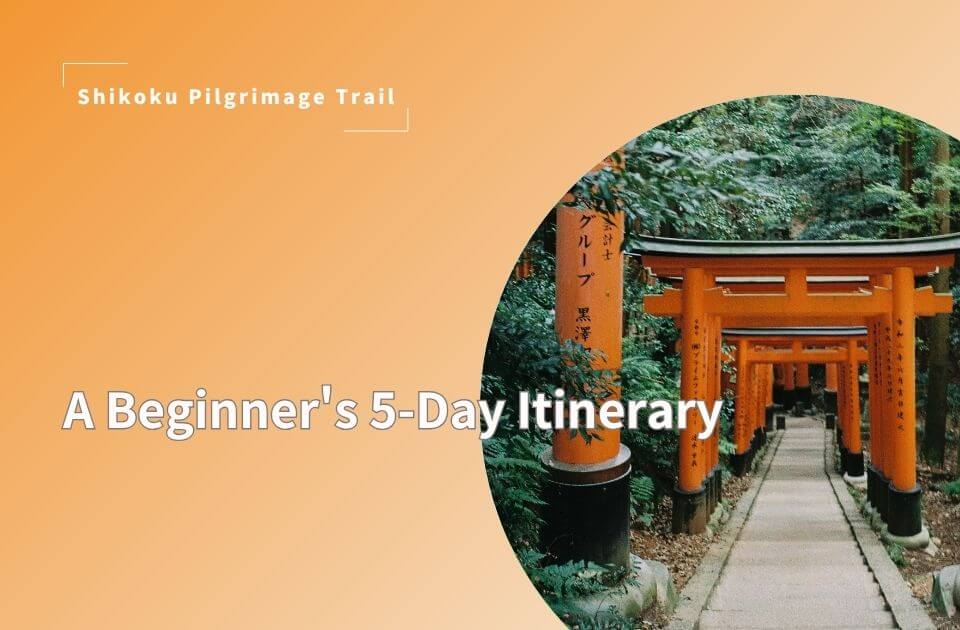
The Shikoku Pilgrimage is one of the most remarkable walking routes in the world, and almost nobody outside Japan knows about it. While the Camino de Santiago in Spain gets all the international attention, the Shikoku Henro, a 1,200-kilometer circuit of 88 temples around Japan’s fourth-largest island, has been walked by pilgrims for over 1,200 years. It is longer, older, and arguably more spiritually intense than the Camino, and yet you could walk entire sections without seeing another foreign face.
I am not going to pretend I have walked the entire thing. The full circuit takes 30 to 60 days on foot, and I have not yet had that kind of time. But I have done sections over multiple trips, and I designed this five-day itinerary to give you a genuine taste of the pilgrimage experience without requiring a month-long sabbatical.
Understanding the Henro Before You Go
The pilgrimage follows the path of Kobo Daishi (Kukai), the founder of Shingon Buddhism, who is said to have established all 88 temples in the early 9th century. Pilgrims, called henro, traditionally walk the route clockwise starting from Temple 1, Ryozenji, in Tokushima Prefecture and ending at Temple 88, Okuboji, in Kagawa Prefecture. Many then visit Mount Koya in Wakayama to pay respects at Kobo Daishi’s mausoleum.
You do not need to be Buddhist to do the pilgrimage. You do not need to start at Temple 1 or visit all 88 temples. You do not even need to walk. Many Japanese pilgrims complete the circuit by car, bus, or bicycle, and section-walking over multiple trips is completely accepted. The pilgrimage is what you make of it.
That said, walking even a portion of it has a power that driving does not. The pace, the physicality, and the rhythm of arriving at each temple on foot create something that is hard to describe but impossible to miss.
What to Wear and Carry
Traditional henro wear includes a white vest (hakui), a conical sedge hat (sugegasa), and a walking staff (kongozue). You can buy these at Temple 1, Ryozenji, or at shops near the starting point. The full set costs about 5,000 to 8,000 yen. You do not need all of it, but wearing at least the white vest identifies you as a pilgrim, and this matters because locals along the route will offer you osettai, small gifts of food, drinks, or encouragement that are a beautiful part of the pilgrimage tradition.
You will also want a nokyocho, a stamp book, which costs about 2,000 to 3,000 yen. At each temple, a calligrapher will write the temple’s name and stamp your book with red ink seals. This costs 300 yen per temple and is one of the most treasured souvenirs you can bring home from Japan. The calligraphy is done live in front of you, and watching the brush strokes appear is a small ceremony in itself.
For practical gear: comfortable walking shoes with good support, a daypack with water, sunscreen, rain gear, and basic first aid supplies. The route is well-marked with red arrows and small pilgrimage markers, but having an offline map on your phone is wise.
The Five-Day Itinerary
Day 1: Temples 1 through 6 (Tokushima Prefecture)
Start at Temple 1, Ryozenji, near Bando Station in Tokushima. The Tokushima Line train from Tokushima Station takes about 25 minutes (about 360 yen). At Ryozenji, buy your pilgrim gear and stamp book, and learn the basic ritual: at each temple, you light incense and a candle, place a name slip (osame-fuda) in the box, recite the Heart Sutra if you choose to (or simply stand quietly), and then get your stamp book signed.
The walk from Temple 1 to Temple 6 covers about 14 kilometers and is mostly flat, following roads through agricultural land and small towns. This is an easy day designed to get your body and mind into pilgrimage mode. Each temple is relatively close to the next, with walks of 20 to 60 minutes between them.
Temple 2, Gokurakuji, has a beautiful garden worth lingering in. Temple 3, Konsenji, has an impressive multi-story pagoda. Take your time. The point is not to rush.
Spend the night in the town of Itano or Awa, near Temple 6. A simple business hotel or minshuku (family-run guesthouse) costs about 5,000 to 7,000 yen per night. Some offer henro discounts. Ask when you check in by saying “henro desu” (I am a pilgrim).
Day 2: Temples 7 through 11 (Into the Mountains)
This day gets more challenging and more rewarding. Temple 10, Kirihata-ji, and Temple 11, Fujii-dera, involve significant uphill walking. The path between Temples 11 and 12 is actually one of the most difficult sections of the entire pilgrimage, a mountain trail called the “henro korogashi” (pilgrim tumble), but on this itinerary we are stopping at Temple 11 and saving the mountain crossing for another trip.
The distance from Temple 7 to Temple 11 is about 18 kilometers. Temple 7, Jurakuji, is known for its healing water. Temple 8, Kumadani-ji, sits in a forested valley that feels wonderfully remote. The walk between temples takes you through rural Japan at its most authentic, past rice paddies, persimmon orchards, and farmhouses.
This is the day you will likely receive your first osettai. A farmer might hand you a mandarin orange. An elderly woman might offer you a cup of tea at her doorstep. Accept with both hands, bow, and say “osettai arigatou gozaimasu.” These moments are the heart of the henro experience.
Stay near Fujii-dera (Temple 11) for the night. There are minshuku in the area, or you can take a bus or taxi back to a larger town if accommodation is limited. A taxi to Kamojima Station area would cost about 2,000 to 3,000 yen.
Day 3: Skip Ahead to Temples 22 through 23 (Cape Muroto Area, Kochi Prefecture)
Here is where we deviate from the strict sequential order, which is perfectly fine. Take public transportation from the Tokushima area to Kochi Prefecture’s coast. A bus from Tokushima Station to the Muroto area takes about three hours (about 3,000 yen), or you can take a combination of train and bus.
Temple 24, Hotsumisaki-ji, at the tip of Cape Muroto, is one of the most dramatically situated temples on the entire pilgrimage. It sits on a cliff overlooking the Pacific Ocean, and according to tradition, this is where the young Kukai achieved enlightenment while meditating in a nearby sea cave called Mikurodo. You can visit the cave, which is free and a short walk from the temple.
The walk from Temple 23, Yakuoji (which you can visit by bus from the south), to Temple 24 along the coast is one of the most scenic stretches of the pilgrimage. The ocean is vast, the road hugs the coastline, and there is a meditative quality to walking with nothing but sea and sky on one side.
Stay in the Muroto area. Muroto has several minshuku and small hotels, with prices around 5,000 to 8,000 yen including dinner and breakfast. The seafood dinners at local places here are outstanding because this is a fishing region, and the katsuo (bonito) is as fresh as it gets anywhere in Japan.
Day 4: Temple 31 and the Kochi Experience
Travel from Muroto to Kochi City, the capital of Kochi Prefecture. The bus takes about two and a half hours (about 2,500 yen). Kochi City is a lively place with a famous Sunday market, one of the oldest in Japan, stretching for about a kilometer along the main street with vendors selling everything from produce to knives to plants.
Visit Temple 31, Chikurin-ji, which sits atop Mount Godai overlooking Kochi City. The temple has a beautiful five-story pagoda and a garden designed in the Muromachi period. Admission to the garden and treasure hall is 400 yen. The temple grounds are free.
Use the afternoon to explore Kochi itself. The Hirome Market near Kochi Castle is a covered food market and drinking hall where you must try katsuo no tataki, seared bonito that is Kochi’s signature dish. A serving costs about 600 to 800 yen at any of the market stalls, and eating it with ponzu sauce and garlic in this bustling market is one of the great food experiences in Japan.
Kochi Castle (420 yen admission) is one of only twelve castles in Japan with an original keep. It is worth climbing to the top for the view.
Stay in Kochi City. Hotels near the station range from about 5,000 to 10,000 yen.
Day 5: Temple 75 and Zentsuji (Kagawa Prefecture)
Take the JR limited express from Kochi to Zentsuji in Kagawa Prefecture (about 90 minutes, about 4,500 yen). Temple 75, Zentsu-ji, is the birthplace of Kobo Daishi and one of the most important temples on the entire pilgrimage. It is massive compared to most of the other temples, with extensive grounds, an impressive main hall, and a unique underground passage called the kaidan meguri where you walk in complete darkness, following a handrail, symbolizing the journey from ignorance to enlightenment. The passage costs 500 yen and is genuinely profound in its simplicity.
Zentsu-ji is also near Temple 76, Konzoji, which is a pleasant 30-minute walk away through residential streets and farmland. If you have time, this short walk gives you one last taste of the henro path.
From Zentsuji, you can take the train to Takamatsu (about 40 minutes, about 850 yen) for your departure, or continue to Okayama via the Seto Ohashi Bridge (about 50 minutes by train from Takamatsu) to connect back to the main Shinkansen network.
Practical Notes for the Henro
Accommodation along the pilgrimage route ranges from henro-specific guesthouses (called tsuyado or zenkonyado, some of which are free or donation-based) to standard business hotels and minshuku. During popular seasons (spring and autumn), booking a day ahead is wise, especially in rural areas with limited options.
The route is best walked in spring (March through May) or autumn (October through November). Summer is brutally hot and humid, and some mountain sections are genuinely dangerous in winter weather.
Japanese language ability is helpful but not essential. The temples are well-signposted, the path markers are visual, and basic gestures and a translation app get you through accommodation and meals. Many minshuku owners along the route are accustomed to hosting pilgrims who speak limited Japanese.
Budget about 8,000 to 12,000 yen per day for accommodation, meals, temple stamps, and incidental expenses. This is not a luxury trip. It is a pilgrimage, and simplicity is part of the point.
The Shikoku Pilgrimage is one of those experiences that gives back more than you put in. Five days is enough to feel it in your legs and in your mind. And who knows, you might find yourself planning a return trip to walk the rest. That is what happened to me. Go walk it.
Follow Japan is your insider guide to experiencing Japan like a local. Follow @followjapan_fj on Instagram for daily Japan travel tips and hidden gems.


