
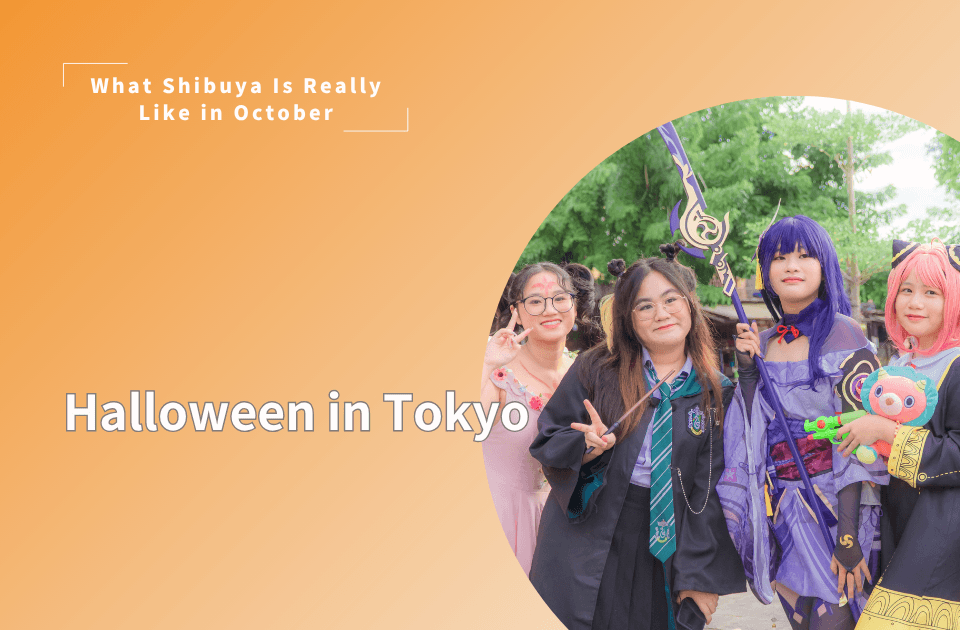
Every October, someone messages me some version of: “We’re in Tokyo over Halloween! Shibuya’s going to be crazy, right? Can’t wait!” And every year my answer surprises them: Shibuya does not want you there for Halloween, and it is not subtle about it. The world-famous street party you have seen in videos effectively no longer exists, at least not legally, and the city has spent several years making sure of it. Here is what Shibuya in late October 2026 is actually like, why it changed, and where the Halloween energy went instead, because it definitely did not disappear.
What Actually Happens in Shibuya Now
Let me describe the scene from recent years, because 2026 will look the same. In the days before October 31, the ward government publishes notices in Japanese and English with a message that could not be clearer: Shibuya is not a Halloween event venue, and visitors are asked not to come to the area for Halloween at all. The famous Hachiko statue exit area gets physically barricaded, in 2025 from the evening of October 30 through the early morning of November 1. Convenience stores and liquor shops around the station are asked to suspend alcohol sales during the period, and drinking on the street in the district is banned at night year-round anyway, a rule made permanent after the chaos years. Even the LUUP e-scooter and e-bike share ports in the ward, 21 of them, were shut down during the 2025 restriction window so people could not ride into the closed zone. Police and private security line the crossing, megaphones run on loop, and the whole area operates like a controlled corridor: you can pass through to shop or catch your train, but stopping to party is actively prevented.
Why so drastic? The short version: the street party grew past any organizer’s control, because it never had an organizer. Years of crushing crowds, mountains of garbage, property damage and, after the deadly crowd disaster in Seoul’s Itaewon in 2022, genuine safety fear pushed the ward from tolerance to prohibition. One real problem officials cited: overseas visitors were not seeing the Japanese-language warnings and arriving unaware the rules had changed, which is exactly why the English messaging is now so blunt. Consider this article part of that public service.
Should You Still Visit Shibuya in Late October?
Absolutely, just not at 10pm on October 31 expecting a party. During the day, Shibuya in late October is its normal, excellent self: the crossing, Shibuya Sky’s observation deck (book the sunset slot weeks ahead), the food alleys of the backstreets, the record shops and vintage stores of Udagawacho. Some costume-adjacent fun survives in commercial forms, like themed cafe menus and shop displays. But the crossing-as-costume-carnival is over. If your itinerary has you in Tokyo across the Halloween window, plan Shibuya for daytime, and plan your evening somewhere that actually wants Halloween guests.
Where the Halloween Energy Went
Ikebukuro is the big winner. Its cosplay festival model, run with the city rather than against it, turns streets and parks into an organized event with registration, changing rooms, and photo zones, drawing tens of thousands of costumed participants who came to be photographed rather than to drink. It is family-friendly, foreigner-friendly, and genuinely fun even as a spectator.
Kawasaki, just south of Tokyo, hosts what is probably Japan’s most famous Halloween parade, a produced event with elaborate costume entries and prize money, plus a street crowd that gets the party atmosphere without the anarchy. Shinjuku has absorbed a chunk of the free-floating street energy, and recent street surveys there found nearly half of costumed participants were international visitors; expect a lively but policed scene around Kabukicho, with its own growing set of rules. Roppongi and club events citywide host ticketed Halloween parties at every scale, which is where the actual dancing went. And Universal Studios Japan in Osaka runs Japan’s biggest commercial Halloween season all autumn, if your trip heads west.
There is also the quieter, sweeter side: neighborhood shopping streets across Japan now do trick-or-treat events for local kids, department stores compete on Halloween displays, and every cafe chain in the country sells something pumpkin-and-purple for six weeks. Halloween in Japan did not die when Shibuya shut the party down. It grew up and moved.
How Japan Does Halloween Differently
It helps to understand what Halloween even is here, because it explains where the energy goes. Japan imported the holiday through theme parks and shopping streets in the 1990s and 2000s, so it arrived as a costume-and-merchandise season, not a trick-or-treating or horror tradition. There is no door-knocking; kids’ events are organized daytime affairs run by shopping arcades with maps of participating stores. The adult version grew out of cosplay culture, which was already world-class here, and that is why the organized events feel less like a rowdy street party and more like a photography convention with better lighting: elaborate group costumes, tripods, queues for photo spots, everyone asking permission before shooting. Costume quality is, frankly, astonishing. The commercial layer is its own spectacle too: from mid September, convenience stores, Starbucks, and every bakery in the country run purple-and-orange product lines, and limited-edition Halloween snacks are a legitimate souvenir category. If your image of Halloween is chaos, Japan will recalibrate it: here it is craft, queues, and pumpkin lattes, with the chaos carefully escorted out of town.
Practical Advice for Halloween Week 2026
If costumes are your goal, go to Ikebukuro or Kawasaki and check their event dates and registration windows in advance, since costume participation at organized events often requires signup while spectating is free. If nightlife is the goal, book a ticketed party; door prices run 3,000-6,000 yen and sell out for October 31. Do not bring a costume to Shibuya expecting photos at the crossing at night; you will meet barriers, security, and disappointed influencers. Store luggage and change at event facilities, not station bathrooms, which event cities explicitly provide for. And everywhere, remember the two rules that now define public Halloween in Tokyo: no street drinking in the regulated districts, and follow staff directions at pinch points. The crowds are still enormous even at the organized events, and Japan takes crowd flow very seriously now, for the saddest of reasons.
Quick tips:
・Shibuya barricades Hachiko square and restricts alcohol around Halloween; the street party is over
・Street drinking in Shibuya’s core is banned at night year-round, not just at Halloween
・Ikebukuro’s organized cosplay festival is the best costumed experience in Tokyo
・Kawasaki’s parade is the spectacle; clubs and USJ have the parties
・Visit Shibuya in the daytime that week; it is business as usual and still wonderful
The videos of the old Shibuya Halloween will circulate forever, but chasing them in 2026 leads to a police barricade. Go where Halloween is welcome, and Tokyo will still show you a very good time.
For honest, current Tokyo advice, follow @followjapan_fj on Instagram.


