
The first time I smelled a yaki-imo truck rolling through my neighborhood on a cold October evening, its loudspeaker crooning a slow song about roasted sweet potatoes, I understood something important: Japan does not just watch autumn, it eats it. The supermarkets flip overnight from summer somen noodles to chestnuts and mushrooms, convenience stores roll out sweet potato everything, and restaurants rewrite their menus around a handful of seasonal stars. The Japanese even have a phrase for it: shokuyoku no aki, “autumn, the season of appetite.” If you are visiting between late September and November, here is what to hunt down, where to find the best versions, and roughly what it will cost you.
Momiji Manju: The Maple Leaf Cake Worth a Detour
Momiji manju is a small maple-leaf-shaped cake, usually filled with sweet red bean paste, and it is the signature treat of Miyajima, the shrine island near Hiroshima. The name comes straight from the island’s famous maple valley, Momijidani, and shops have been baking these things since the early 1900s. The classic version is good. The version you should actually seek out is age-momiji: a momiji manju battered, deep fried on a skewer, and handed to you hot. It costs around 200-300 yen and it is one of Japan’s great street foods, crisp outside and molten inside.
Modern fillings go far beyond red bean: custard, chocolate, matcha, lemon, and cheese all have their partisans. The shops along Miyajima’s Omotesando shopping street make them fresh on wonderful clanking machines you can watch through the windows, and the freshly made ones are a different food from the boxed souvenirs. If Hiroshima is not on your route, department store food halls in Tokyo and Osaka often stock momiji manju in autumn, though you will sacrifice the hot-off-the-machine magic.
Kuri: Japan Goes Chestnut Crazy
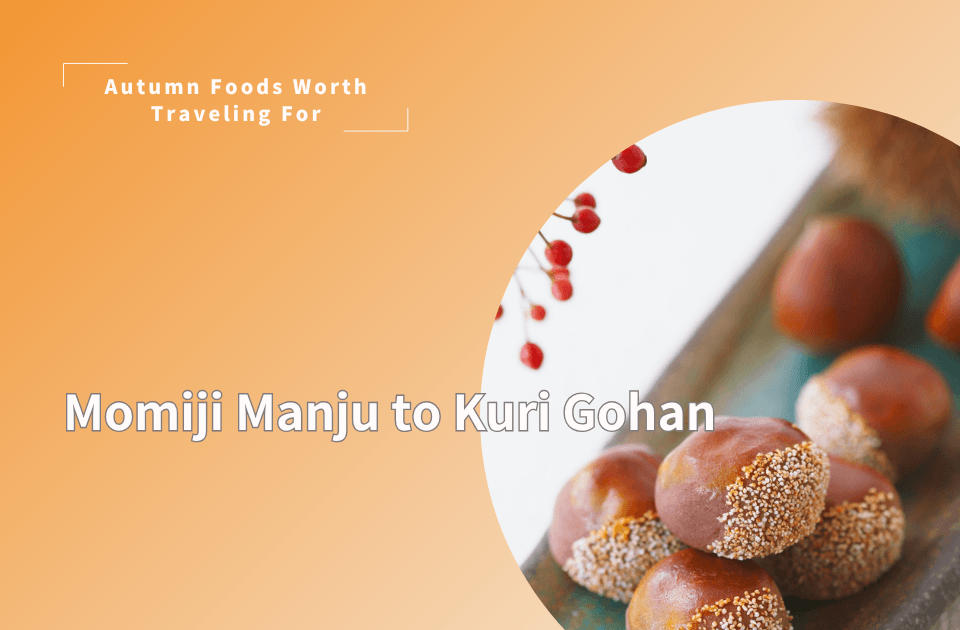
Chestnuts have been cultivated in Japan for thousands of years, and every autumn the country remembers this loudly. The dish to try first is kuri gohan, rice steamed with chunks of sweet chestnut and a whisper of salt and sake. Homely, simple, and deeply seasonal, it shows up as a limited menu item at teishoku set-meal restaurants and ryokan breakfasts from late September, often for no premium at all. If a handwritten menu board says kuri gohan, that is the kitchen telling you what to order.
Then there is the pastry side. Mont Blanc, the swirl of chestnut cream piped over sponge and whipped cream, is treated with near-religious seriousness here. The serious shops pipe the chestnut cream to order, because the aroma starts fading within the hour. Tokyo and Kyoto both have famous purveyors with queues to match, where a made-to-order Mont Blanc runs 1,500-2,500 yen and is worth every minute of the wait. At the other end of the scale, even the convenience store Mont Blancs at 300 yen are respectable in season. In between, look for kuri manju (chestnut-filled baked buns), kuri yokan (dense bean jelly studded with whole chestnuts), kuri kinton, and bags of roasted tenshin amaguri sold warm outside train stations.
The Savory Stars: Sanma, Matsutake, and New Rice
Sanma, the Pacific saury, is autumn’s fish. Grilled whole with salt, served with a mound of grated daikon and a squeeze of sudachi citrus, it appears on every izakaya’s seasonal menu from September. A proper sanma set meal with rice, miso soup, and pickles runs 1,000-1,500 yen at a neighborhood teishoku restaurant and tastes like the season itself. Do what locals do: mix a little soy sauce into the daikon, lay a flake of fish on rice, and alternate bites.
Matsutake mushrooms are the luxury end of the spectrum. These pine mushrooms are prized for a piney, almost cinnamon-like aroma, and domestic ones can cost tens of thousands of yen per kilogram, which is why nobody actually buys them whole except for gifts. The traveler’s move is dobin mushi: a delicate dashi broth steamed in a little teapot with slices of matsutake, chicken, shrimp, and gingko nuts. You pour the broth into a tiny cup, squeeze in sudachi, sip, then eat the treasures inside. Mid-range Japanese restaurants serve it for 800-1,500 yen in season, and it delivers the full matsutake experience without the luxury invoice.
And do not overlook shinmai, the new rice harvested in autumn. From September, rice bags and restaurant menus sprout proud shinmai labels. The difference from stored rice is real: sweeter, glossier, more fragrant, with a bounce older rice loses. If a menu says shinmai, order rice, even if you were not planning to.
Street-Level Autumn: Sweet Potatoes, Persimmons, and Fruit
Yaki-imo, stone-roasted sweet potatoes, are sold from trucks and supermarket roasting machines through the cold months, usually 300-600 yen for a whole potato wrapped in paper. The Beni Haruka and Silk Sweet varieties are so dense and sweet they border on dessert; eat one on a park bench on a cold day and you will understand a whole genre of Japanese nostalgia. Convenience stores and cafes go all-in on the flavor in autumn: sweet potato lattes, soft serve, pastries, and the inevitable seasonal Kit Kats.
Kaki, persimmons, pile up in markets from October, often six for a few hundred yen. Eat them fresh and crisp like an apple, or hunt for hoshigaki, the hand-dried version traditionally hung in strings under farmhouse eaves. Drying turns them into something like natural caramel, and good hoshigaki are a genuine delicacy sold in beautiful gift boxes. Autumn is also Japan’s top fruit season beyond persimmons: nashi pears the size of softballs, Shine Muscat grapes, and late-season figs all crowd the produce sections, and a fruit-parlor parfait built on any of them is a worthwhile splurge at 1,000-2,000 yen.
Drink the Season Too
Autumn has its own sake category, and most visitors walk right past it. Hiyaoroshi is sake brewed in winter, rested through the summer, and released in autumn, rounder and deeper than the fresh spring bottlings. Izakaya and sake shops advertise it with autumn-leaf labels from September through November, and a glass typically costs 500-900 yen. It pairs almost suspiciously well with grilled sanma and mushroom dishes, which is not a coincidence: Japanese seasonal food and drink evolved together. The big breweries also release autumn-limited beers, usually maltier and stronger than their standard lines, and cafes nationwide pour out roasted-tea hojicha lattes that taste like autumn in a cup. If you see a red-and-gold label on anything drinkable between September and November, it is worth a try.
Where to Do Your Hunting
If you only remember one word from this article, make it depachika: the food halls in department store basements. Isetan in Shinjuku, Daimaru in Kyoto, Hanshin in Osaka, any of them will have nearly everything above under one roof, dressed up beautifully, with free samples floating around. It is the single most efficient autumn eating experience in the country. Beyond that, morning markets and roadside farm stations (michi no eki) in rural areas sell chestnuts, persimmons, and mushrooms at half city prices, and autumn food festivals pop up in parks most October and November weekends in every major city.
Quick tips:
・”Kikan gentei” means limited-time only: in autumn, treat it as an order button
・Miyajima’s age-momiji stands cluster along Omotesando street near the ferry terminal
・Dobin mushi is the affordable way into matsutake, no luxury budget required
・Persimmons and chestnuts peak in October; sanma runs September through November
・Depachika close around 8pm and discount perishables in the final hour
Autumn eating in Japan rewards curiosity more than budget. Follow the seasonal signs in any shop window, order the thing with the maple leaf icon next to it, and you will eat better than any fixed itinerary could promise.
Hungry for more? Follow @followjapan_fj on Instagram for seasonal food finds across Japan.


