
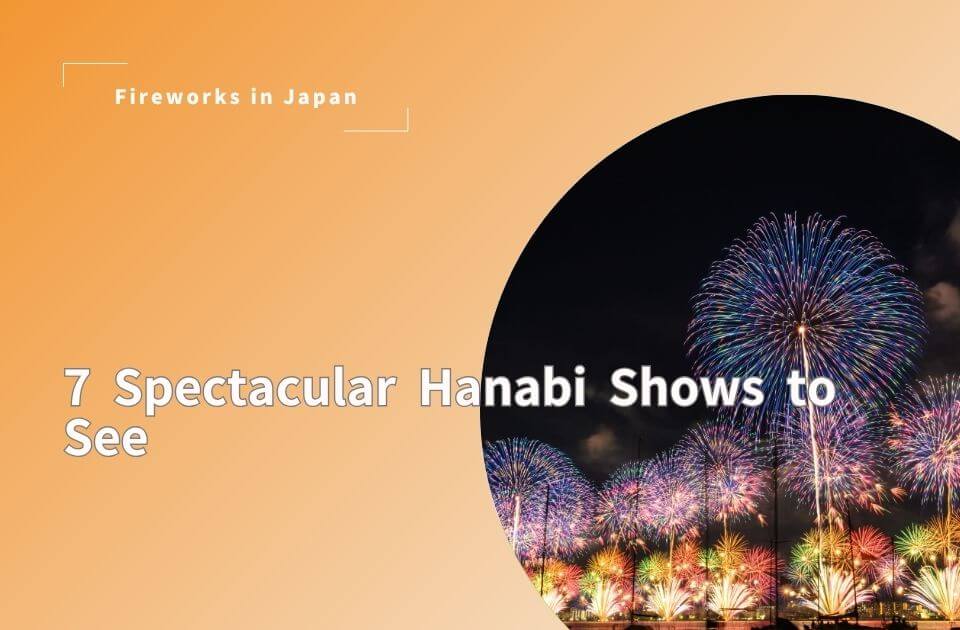
There is a reason the Japanese word for fireworks is hanabi, which literally means “fire flowers.” When you see a Japanese fireworks show for the first time, you understand. These are not the chaotic explosions you might be used to at home. Japanese hanabi are crafted, shaped, and choreographed with a level of artistry that will make you rethink everything you thought you knew about fireworks.
I remember my first major hanabi taikai in Japan. I was sitting along the banks of the Sumida River in Tokyo, squeezed between thousands of people on blue tarps, holding a can of beer and a bag of edamame from the convenience store. When the first shell went up and bloomed into a perfect chrysanthemum shape, the entire crowd gasped. Not cheered. Gasped. That is the Japanese fireworks experience.
Here are seven shows that I have either attended myself or that friends who live here consistently recommend. Each one is worth planning a summer trip around.
1. Sumida River Fireworks Festival, Tokyo (Late July)
The Sumida River Fireworks Festival is the most famous hanabi show in Japan, and it draws close to a million spectators every year. Held along the Sumida River between Asakusa and the Tokyo Skytree, about 20,000 fireworks go up over the course of 90 minutes from two separate launch sites.
Let me be honest: this one is a mob scene. If you want a prime spot along the riverbank, you need to stake out your tarp by early afternoon for an event that starts around 7 PM. The closest stations are Asakusa on the Ginza Line and Oshiage on the Hanzomon Line, and both will be absolute madness.
My strategy after a few years of trial and error: skip the riverbank and head to a rooftop. Several restaurants and hotels in the Asakusa area sell special hanabi dinner packages for 8,000 to 15,000 yen that include food, drinks, and a view from above. The Asakusa View Hotel is a popular choice. Alternatively, walk about 15 minutes east toward the Skytree area where the crowds thin out, and you can still see both launch sites.
Free viewing is absolutely possible if you are willing to deal with crowds. Just follow the flow of people wearing yukata and carrying picnic supplies, and you will end up somewhere with a view.
2. Nagaoka Festival Grand Fireworks, Niigata (August 2-3)
If I could only attend one fireworks show in Japan for the rest of my life, it would be Nagaoka. This is widely considered one of the top two or three hanabi events in the country, and it is genuinely moving in a way that fireworks should not be able to be.
The show takes place along the Shinano River in Nagaoka City, Niigata Prefecture. The highlight is the Shosan, or “Phoenix” fireworks, which are launched as a prayer for the city’s recovery from wartime bombing and a major earthquake. When the Phoenix sequence begins, the entire sky fills with gold, and many people in the crowd are visibly emotional. It is something I will never forget.
About 20,000 fireworks are launched over two nights. The signature piece is the Sanjakudama, an enormous three-foot shell that blooms into a flower spanning 600 meters across the sky.
Reserved seating on the right bank costs about 3,000 to 6,000 yen per seat and sells out quickly through the official Nagaoka Hanabi website, usually going on sale in late May. The Joetsu Shinkansen from Tokyo to Nagaoka takes about 90 minutes. Because of the crowds, many people take late-night trains back to Tokyo after the show, and JR East sometimes runs special late services.
3. Omagari National Fireworks Competition, Akita (Late August)
Omagari is not just a fireworks show. It is a competition. The best pyrotechnics companies in Japan face off at the Omagari National Fireworks Competition held along the Omono River in Daisen City, Akita Prefecture. Because it is a competition, every company brings their absolute best work, which means the quality is staggeringly high.
About 18,000 fireworks are launched during the event. The daytime section features colored smoke fireworks, which are surprisingly beautiful, and the nighttime competition includes both set pieces and creative fireworks, where companies experiment with new techniques and designs.
Getting there requires some effort. The Akita Shinkansen runs from Tokyo to Omagari Station in about three and a half hours. Tickets for the event range from free standing areas to reserved box seats at about 3,000 to 25,000 yen. The paid seats are worth it here because the show is long and you will want to be comfortable.
A friend of mine who has attended six times gave me this advice: bring a blanket, warm clothes for the evening, and more food than you think you need. The free areas fill up by noon for an event that does not start until late afternoon.
4. Miyajima Water Fireworks Festival, Hiroshima (Mid-August)
For sheer visual drama, it is hard to beat fireworks launched over water with the floating torii gate of Itsukushima Shrine in the foreground. The Miyajima Water Fireworks Festival is one of the most photogenic events in all of Japan.
About 5,000 fireworks are launched from boats in the bay, and the reflections on the water double every explosion. The combination of the illuminated shrine, the torii gate, and the fireworks is otherworldly.
Here is the challenge: Miyajima is a small island, and the ferry back to the mainland gets incredibly crowded after the show. If you can, book a ryokan on the island itself. Iwaso Ryokan is a classic choice, though rooms during hanabi season start at around 25,000 yen per person with dinner and breakfast. The more budget-friendly option is to accept that you will wait in line for the ferry and bring entertainment for the 60 to 90 minute wait.
The JR ferry from Miyajimaguchi is covered by the Japan Rail Pass. From Hiroshima Station, take the JR San-yo Line to Miyajimaguchi, about 25 minutes, then the ferry, about 10 minutes.
5. Lake Suwa Fireworks Festival, Nagano (August 15)
The Lake Suwa Fireworks Festival launches about 40,000 fireworks in a single night, making it one of the largest shows in Japan by sheer volume. The centerpiece is a two-kilometer-wide waterfall firework called the Kiss of Fire, which cascades across the lake surface and literally takes your breath away.
Suwa is in Nagano Prefecture, about two and a half hours from Tokyo’s Shinjuku Station via the JR Chuo Line limited express Azusa. The lake setting means the fireworks reflect beautifully off the water, and the surrounding mountains create a natural amphitheater that amplifies the sound.
Free viewing areas are available around the lakeshore, but the best spots fill up early in the morning. Reserved seats on the lakeshore cost about 4,000 to 5,000 yen. I recommend the areas near Suwa City Kohan Park, which has good sightlines and is a short walk from Kami-Suwa Station.
6. Kumano Fireworks Festival, Mie (August 17)
The Kumano Fireworks Festival is a hidden gem that most foreign visitors never hear about. Held at Shichirimihama Beach in Kumano City, Mie Prefecture, this show features something unique: self-exploding underwater mines that send enormous columns of water and fire shooting into the air from the ocean surface. The effect is unlike anything I have seen at any other fireworks show.
About 10,000 fireworks are launched over the ocean, and the onigiri-shaped fireworks, a Kumano specialty, are a crowd favorite. The beach setting makes this one of the more relaxed major hanabi events. Spread out a mat on the sand, crack open a drink, and watch the show.
Access is via JR Kisei Line to Kumano-shi Station, which takes about three hours from Nagoya. The beach is a 5-minute walk from the station. Because this is off the main tourist track, accommodation options are more limited. Book early or consider staying in Shingu or Owase.
7. Edogawa Fireworks Festival, Tokyo (Early August)
If the Sumida River show is too chaotic for you, the Edogawa Fireworks Festival offers a fantastic alternative with slightly less insanity. Held along the Edogawa River on the border of Tokyo and Chiba, this show launches about 14,000 fireworks and is famous for its opening sequence: a five-second barrage of 1,000 fireworks that lights up the entire sky at once.
The Edogawa side is accessible from Shinozaki Station on the Toei Shinjuku Line. The Chiba side, which hosts the simultaneous Ichikawa Fireworks Festival, is accessible from Koiwa Station on the JR Sobu Line. Both sides offer good views, but the Edogawa riverbank has more space to spread out.
This show is completely free, and the wide riverbank means you do not need to arrive as obscenely early as for some other festivals. Getting there by 4 or 5 PM should be fine for a decent spot.
How to Do Hanabi Like a Local
Japanese people prepare for fireworks festivals with a level of seriousness that I find endearing. Here is how to fit in.
First, bring a blue tarp or picnic sheet. You can buy these at any home center or 100-yen shop for 100 to 500 yen. This is your real estate for the evening. Arrive early, lay it down, and guard it with your life.
Second, hit the convenience store beforehand. A typical hanabi picnic spread from a konbini includes onigiri (about 130 yen each), karaage fried chicken (about 250 yen), edamame (about 200 yen), and canned beer or chuhai cocktails (about 200 yen each). Total cost for a solid hanabi dinner for one: about 1,000 yen. You cannot beat that.
Third, wear a yukata if you can. Rental shops near major fireworks venues charge about 3,000 to 5,000 yen for a full set including dressing. Wearing a yukata to hanabi is one of the quintessential Japanese summer experiences.
Fourth, bring a portable fan or uchiwa. Most festivals distribute free uchiwa paper fans with advertisements on them, but a small battery-powered fan from Daiso (about 300 to 500 yen) is a lifesaver.
Fifth, be patient with the crowds. The period immediately after a major fireworks show ends is a controlled chaos of hundreds of thousands of people all trying to reach the train station at the same time. Experienced locals wait 30 to 45 minutes after the show ends before heading to the station. Use that time to finish your drinks, enjoy the atmosphere, and let the first wave of people clear out.
Hanabi season in Japan runs from late July through August, with a few shows extending into September. Almost every city and town has its own local fireworks festival. The seven I listed above are the big names, but some of my favorite memories are from small-town shows with only a few thousand spectators and maybe 2,000 fireworks. Check local tourism websites or ask at your hotel, and you will almost certainly find a show happening nearby whenever you visit.
So grab a tarp, stock up on konbini snacks, and go see fire flowers bloom across the Japanese sky. You will never look at fireworks the same way again.
Follow Japan is your insider guide to experiencing Japan like a local. Follow @followjapan_fj on Instagram for daily Japan travel tips and hidden gems.


