
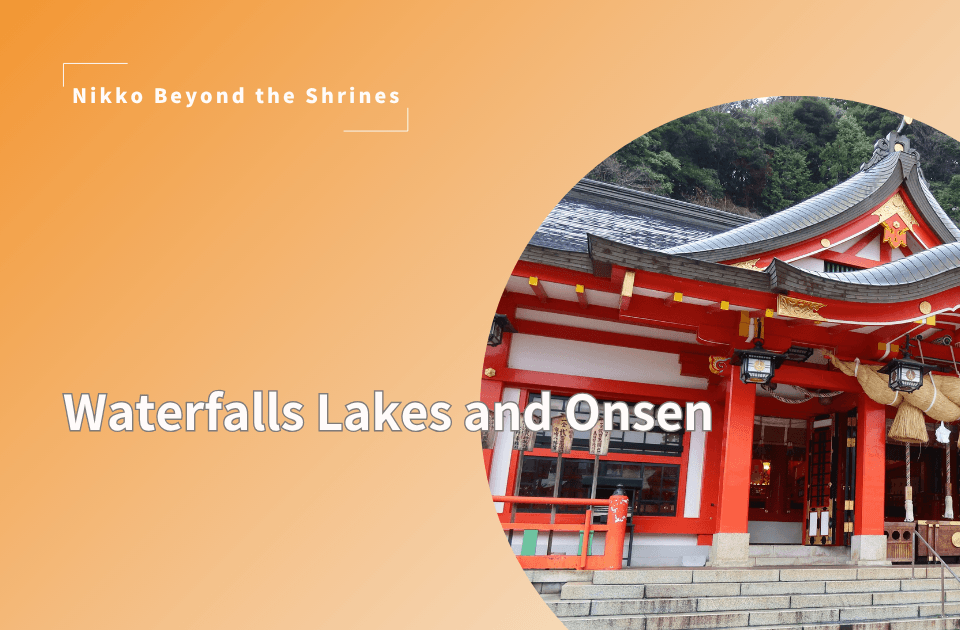
Most visitors do Nikko wrong, and I say that with love, because I did it wrong the first time too. The standard play is a day trip from Tokyo: two hours up, a rushed lap of the famous Toshogu shrine complex, souvenir gate, two hours back. Fine. But the shrines are the front door of Nikko, not the house. Behind them rises an entire volcanic highland of waterfalls, a caldera lake, marshland hiking, and one of the most atmospheric hot spring villages in eastern Japan, all connected by a single dramatic mountain road. Here is the Nikko that deserves your overnight stay, especially in autumn.
The Vertical Geography That Changes Everything
Nikko is really two destinations stacked on top of each other. The town and shrine area sit at around 600 meters. Then the Irohazaka Winding Road, a famous one-way switchback with 48 hairpin turns, climbs to Lake Chuzenji at 1,269 meters, and the road continues higher still to Yumoto Onsen at about 1,500 meters. That vertical kilometer matters enormously in autumn: the top peaks in early to mid October while the shrine town does not peak until late October into early November. Understand the stack and you can hit peak color somewhere in Nikko across a four-week window. Ignore it and you might drive up from perfectly green streets into bare trees.
The climb itself is a sight. Irohazaka in mid October is one of Japan’s classic foliage drives, a rolling tunnel of red and gold, and the Akechidaira Ropeway near the top gives you the postcard view over Kegon Falls and the lake. Fair warning: on peak-season weekends the road becomes a slow-motion parade, so go early or go on a weekday.
Waterfalls: The Big One and the Better One
Kegon Falls is the headliner, one of Japan’s three great waterfalls, a 97-meter single drop where Lake Chuzenji empties over a volcanic cliff. The free upper observation deck is good; the paid elevator (600 yen round trip) that descends to a platform at the base is the version worth doing, with the full curtain of water thundering in front of an amphitheater of autumn color. Mid October crowds here are real, so this is your 9am stop.
But my personal favorite is Ryuzu Falls, the “dragon’s head,” further along the lake’s north shore. It is a twin cascade tumbling 210 meters down a lava slope, and the viewing spot is a teahouse where you frame the falls through maples with a cup of matcha in hand. It photographs better than Kegon in autumn, costs nothing, and takes twenty minutes. Between the two, the lakeside road passes quiet beaches and the Italian and British embassy villa parks, elegant lakeside retreats from the era when Chuzenji was the summer resort of Tokyo’s diplomatic corps, now open to visitors.
Above the Lake: Senjogahara and Yumoto Onsen
Past Ryuzu the landscape opens into Senjogahara, a 400-hectare highland marsh crossed by wooden boardwalks. The flat, easy two-hour walk from Ryuzu Falls to Yudaki Falls, through golden grassland with volcanic peaks all around, is the best half-day hike within three hours of Tokyo, and in early October the marsh grasses turn a shade of amber that no camera quite captures. Buses run along the main road parallel to the trail, so you can walk one way and ride back.
At the top of the road sits Yumoto Onsen, a small, quiet hot spring village on a lake, fed by milky sulfur springs that leave your skin smelling faintly of the earth for a day. This is where Nikko’s crowds simply evaporate: even in peak season, Yumoto feels like a secret, with crowd levels a fraction of the lakefront’s. The village onsen temple, Onsenji, offers a humble bath attached to a Buddhist temple, and the source pools bubble openly in the marsh behind town. Stay the night here or at Chuzenji rather than day-tripping: ryokan rates from around 12,000-20,000 yen with dinner and breakfast buy you the mountain at dawn, before the first buses arrive, which is Nikko at its absolute best.
Eat the Mountain: Yuba and the Local Table
Nikko has a signature food, and most day-trippers never learn its name. Yuba, the delicate skin lifted from simmering soymilk, has been the town specialty since its temple days, when shojin ryori (Buddhist vegetarian cuisine) fed the monastic complex. Here it is eaten in ways you rarely see elsewhere: thick-rolled sashimi-style yuba with soy and wasabi, yuba soba, deep-fried yuba croquettes sold as street snacks along the shrine approach, even yuba soft serve for the committed. A yuba kaiseki lunch at one of the old restaurants near the Shinkyo bridge runs 2,000-3,500 yen and is the proper way to refuel between the shrines and the mountain. Up at Chuzenji, the lakeside cafes do a locally famous fried-yuba manju, and ryokan dinners at Yumoto lean on mountain vegetables, char from the lakes, and, in autumn, mushroom hotpots that taste like the forest you just hiked through. One more local classic for the road: Nikko’s castella cake shops near the station box up honey-heavy slices that survive the train ride home better than your willpower will.
How to Do It Right
Take the Tobu line from Asakusa, whose limited express trains reach Tobu-Nikko in under two hours; on autumn weekends, reserve seats ahead because they genuinely sell out. Buy one of Tobu’s area passes, which bundle the round trip from Tokyo with unlimited local buses up the mountain, since individual bus fares add up fast. A sensible two-day shape: day one, arrive early, shrines before the tour buses land at 10am, then bus up Irohazaka in the afternoon and sleep at the lake or Yumoto. Day two, Kegon at opening, Ryuzu mid-morning, the Senjogahara walk, a soak at Yumoto, and back down to catch an evening train. If you only have one day, invert the standard plan: go straight up the mountain in the morning and see the shrines in the late afternoon after the crowds thin, since Toshogu’s last entry is comfortably late and the complex is magical in low light.
Quick tips:
・Upper elevations peak in early-mid October; the shrine town peaks late October to early November
・Kegon’s 600-yen elevator to the base is worth it; go at opening
・Ryuzu Falls teahouse is the best matcha view in eastern Japan
・Yumoto Onsen has the sulfur baths and none of the crowds; stay overnight
・Reserve limited express seats and buy the Tobu area pass; autumn weekends sell out
Nikko rewards the traveler who treats it as a mountain, not a museum. Give it a night, climb past the shrines, and you will understand why Tokyo has been escaping here for four hundred years.
More Japan beyond the guidebook: follow @followjapan_fj on Instagram.


