
The Japanese tea ceremony, called chado or sado (the way of tea), intimidated me for years. I imagined it as something impenetrably formal, full of rules I would inevitably break, where one wrong movement of my wrist would cause silent disapproval from everyone in the room. I put off attending one for my entire first year in Japan.
When I finally went, I was annoyed at myself for waiting so long. Yes, the tea ceremony has structure. Yes, there are traditions. But the actual experience of sitting in a quiet room, watching someone prepare tea with complete attention and care, and then drinking a bowl of matcha that someone made specifically for you is one of the most calming, human experiences I have had in Japan. And the bar for participation as a guest is much lower than you think.
What Actually Happens During a Tea Ceremony
A standard tea ceremony, called an otemae, follows a basic sequence. You enter a tea room (chashitsu), typically a small space with tatami floors, a tokonoma alcove with a scroll and flower arrangement, and very little else. The simplicity is deliberate. Everything unnecessary has been removed so you can focus on the tea.
You sit in seiza position (kneeling with your legs folded beneath you) on the tatami. If this is physically difficult, and it is for many people, it is increasingly acceptable to sit cross-legged, and some tea experiences provide small chairs. Do not worry about this in advance. The host wants you to be comfortable.
First, a wagashi sweet is served. You eat this before drinking the tea. The sweet is meant to prime your palate so the bitterness of the matcha has a counterpoint. Pick up the wagashi with the small pick or chopsticks provided (or with your fingers if served on paper), eat it in a few bites, and enjoy it. That is all you need to do with the sweet.
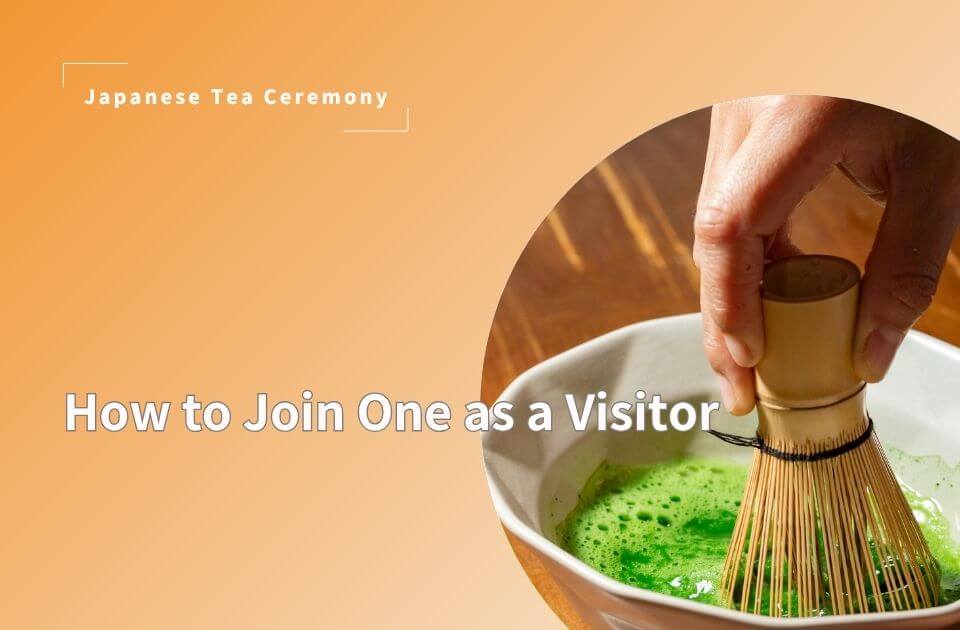
Then the host begins preparing the tea. This is the heart of the ceremony. Every movement, how the host folds the cloth, cleans the whisk, scoops the matcha powder, pours the water, and whisks the tea, is performed with deliberate, practiced intention. There is no rushing. The sound of the water heating in the iron kettle, the soft whisk of the chasen against the bowl, the quiet of the room: this is the meditation.
When the bowl is placed in front of you, pick it up with your right hand and place it on your left palm. Turn the bowl clockwise two small turns (about 90 degrees total) so the front of the bowl, which is the most decorative side, faces away from you. This is a gesture of humility, showing that you do not drink from the “best” side. Drink the tea in a few sips. When finished, wipe the rim where your lips touched with your right thumb and forefinger, and turn the bowl back counterclockwise to its original position. Place it in front of you.
That is genuinely the extent of what you need to know as a guest. The host handles everything else.
Where to Join a Tea Ceremony as a Visitor
Kyoto
Kyoto is the spiritual home of the tea ceremony, and it has the widest selection of experiences for visitors.
Camellia Garden near Kenninji Temple in the Gion area offers tea ceremony experiences in English in a beautiful traditional tea room. Sessions last about 45 to 60 minutes and cost about 3,000 to 4,000 yen per person. The host explains each step in English as they go, which is incredibly helpful for first-timers. The location, just off Gion’s main streets, is convenient.
En Tea Ceremony Experience near Kinkakuji offers both group and private sessions. A group session costs about 2,500 yen, and a private session is about 4,500 yen. The host is patient and welcoming, and the garden setting is lovely.
For something more traditional and less tourist-oriented, Urasenke, one of the three main schools of tea ceremony in Japan, has its headquarters in Kyoto and occasionally opens events to the public. Check their website for “kencha” (offering tea) events at temples, which are often open to anyone for about 500 to 1,000 yen. These are less structured than a formal ceremony but give you a taste of the tradition in an authentic setting.
Many Kyoto temples also offer simple matcha service where a monk or attendant prepares tea for you in a temple garden setting. Shoren-in near Chion-in offers matcha in their beautiful garden for about 500 yen. Koto-in, a sub-temple of Daitokuji, offers matcha in one of Kyoto’s most photogenic moss gardens for about 400 yen. These are not full ceremonies, but they capture the spirit beautifully.
Tokyo
Happo-en Garden in Shirokanedai is one of my favorite places for a tea experience in Tokyo. The garden itself is a stunning Japanese garden that is free to enter, and the tea house within it offers matcha and wagashi for about 800 to 1,200 yen. They also have formal tea ceremony experiences starting at about 3,300 yen with advance reservation.
The Shinjuku Gyoen greenhouse area has a tea house called Rakuutei where tea is served during certain seasons. Check availability before visiting. A bowl of matcha costs about 700 yen.
For a full ceremony experience with English explanation, Maikoya in Shinjuku offers sessions for about 3,500 to 4,500 yen that include wearing a kimono, the tea ceremony itself, and sometimes calligraphy or other cultural activities. It is geared toward tourists but done respectfully.
Kanazawa
Kanazawa has a deep tea culture rivaling Kyoto’s, and some of the tea experiences here feel more intimate because there are fewer tourists. The Shima Geisha House in Higashi Chaya district offers matcha in a beautifully preserved geisha house for about 700 yen (included with the 500 yen admission). The combination of the historic setting and the tea is magical.
Gyokusen-en Garden, adjacent to Kenrokuen, has a tea house overlooking one of the most serene garden views in the city. Matcha and a sweet cost about 730 yen. Sit by the window, drink your tea, and try to remember a time you felt this peaceful.
Uji, Kyoto Prefecture
Uji, just south of Kyoto, is the heart of Japanese tea production and a worthwhile day trip specifically for tea lovers. Taihoan Tea House on the banks of the Uji River offers a tea ceremony experience for about 1,000 yen, conducted in a traditional tea room with views of the river. It is simple, elegant, and connected to the very region where the matcha was grown.
Etiquette Tips That Actually Matter
I have attended dozens of tea ceremonies and tea events at this point, and here is my honest assessment of what matters and what does not.
What matters: showing respect and being present. Turn off your phone. Do not take photos unless explicitly told it is okay (many tourist-oriented ceremonies allow photos during certain parts). Enter the room quietly. Watch what others do and follow their lead.
What does not matter as much as you think: perfect form. If you turn the bowl the wrong direction or sit awkwardly, nobody will be offended. Tea ceremony hosts, especially those who work with foreign visitors, understand that you are learning. They appreciate the effort far more than the execution. I have fumbled the bowl rotation, sat on my feet until they went completely numb and then stumbled when trying to stand, and once nearly knocked over the flower arrangement with my elbow. Every single time, the host smiled and helped me through it.
A few specific tips: wear clean socks (no bare feet in a tea room). Avoid strong perfume or cologne, as the ceremony involves appreciating subtle scents. If you have trouble sitting on the floor, mention it when booking and most places will accommodate you. Remove watches and jewelry that might scratch the tea bowls, as some bowls are extremely valuable antiques.
The Deeper Significance
You can enjoy a tea ceremony purely as a cultural experience, and that is completely valid. But if you are curious about why it has endured for over 400 years since Sen no Rikyu formalized it in the 16th century, the answer lies in a concept called ichi-go ichi-e, which translates roughly to “one time, one meeting.”
The idea is that every tea gathering is unique and can never be reproduced. The specific combination of host, guests, season, weather, tea bowl, flowers, and mood will never happen again. Knowing this, everyone involved treats the gathering with full attention and care. It is an exercise in being completely present, which is something that feels almost revolutionary in an age of constant distraction.
I am not a particularly spiritual person, but I have found that the 45 minutes I spend in a tea room are some of the most focused minutes of my month. There is something about the enforced simplicity, the removal of everything except water, tea, and quiet human interaction, that resets my brain in a way that meditation apps never quite manage.
Making Your Own Matcha at Home
If the ceremony experience inspires you, you can bring a piece of it home. A basic matcha set includes a chawan (tea bowl, about 1,500 to 5,000 yen for a decent one), a chasen (bamboo whisk, about 1,500 to 3,000 yen), a chashaku (bamboo scoop, about 500 to 1,000 yen), and matcha powder (about 1,000 to 2,000 yen for a 30-gram tin of ceremony-grade matcha).
You can find these at department stores, specialty tea shops, and even some souvenir shops. Ippodo Tea in Kyoto (with a branch in Tokyo’s Marunouchi) is an excellent place to buy matcha and get advice from staff who speak English. Their matcha tins start at about 1,100 yen for a 40-gram tin.
The basic preparation is simple: sift about 2 grams (two scoops with the chashaku) of matcha into the bowl, add about 70 milliliters of hot water (around 80 degrees Celsius, not boiling), and whisk vigorously in a “W” motion until frothy. It takes practice to get the foam right, but even imperfect homemade matcha is a lovely daily ritual.
The tea ceremony is not a museum piece. It is alive, it is welcoming, and it is waiting for you. Find a session, book it, show up, sit down, and drink tea. Everything else will take care of itself.
Follow Japan is your insider guide to experiencing Japan like a local. Follow @followjapan_fj on Instagram for daily Japan travel tips and hidden gems.


