
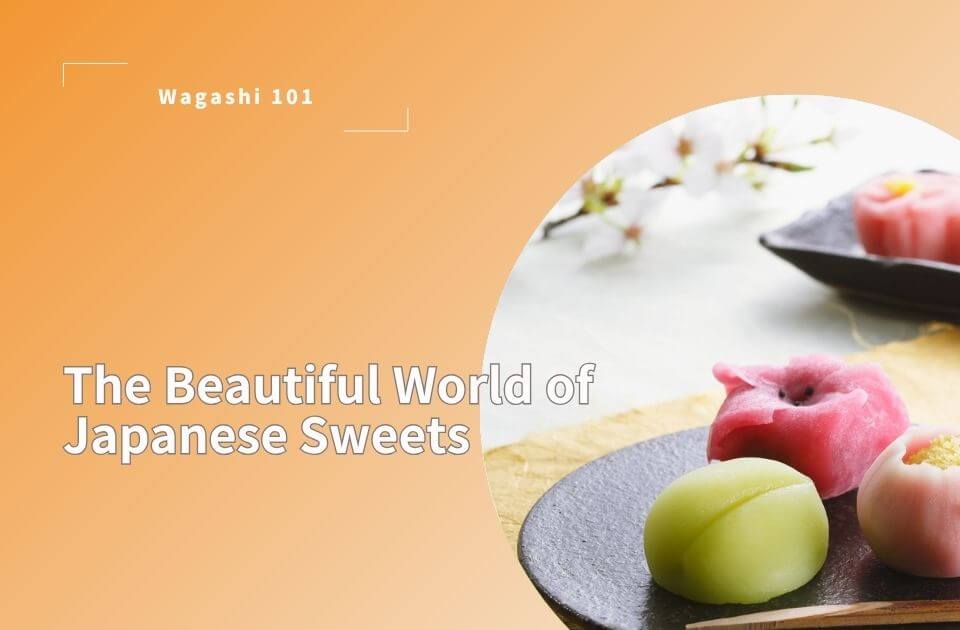
The first wagashi I ever really noticed was at a tea house in Kanazawa. The server placed a small pink sweet on a lacquered plate next to my matcha, and it was shaped like a camellia flower with such precision that I genuinely hesitated to eat it. The petals were delicate, the color was a subtle gradient from pale pink to white at the edges, and a tiny yellow center completed the illusion. It was smaller than my palm, and it was the most beautiful piece of food I had ever seen.
Then I ate it, and I realized that wagashi are not just art. They are a completely different approach to sweetness, one that most Western palates have never encountered. If you are visiting Japan and you walk past those glass cases of tiny colorful sweets in department store basements and traditional shops, this article is going to make you stop, walk in, and try one. I promise it will be worth it.
What Exactly Are Wagashi?
Wagashi is the broad term for traditional Japanese confections. “Wa” means Japanese-style, and “gashi” (from kashi) means sweets. These are distinct from yogashi, which are Western-style sweets like cakes and cookies that came to Japan during the Meiji period. Wagashi predate Western influence and are rooted in Japanese aesthetics, seasonality, and the tea ceremony tradition.
The primary ingredients are plant-based: sweet azuki bean paste (called an or anko), rice flour (mochiko and shiratamako), agar-agar (kanten), sugar, and seasonal additions like chestnuts, sweet potato, yuzu, and matcha. You will rarely find butter, cream, or chocolate in traditional wagashi. This makes many of them naturally vegan, though not all, so check if that matters to you.
The defining characteristic of wagashi is restraint. They are sweet, but not aggressively so. Coming from a country where desserts compete to be the richest, sweetest, most indulgent thing on the menu, wagashi felt almost subdued at first. But that subtlety is the point. These sweets are designed to complement bitter matcha tea, and their gentle sweetness is meant to linger rather than overwhelm.
Types of Wagashi You Need to Know
Mochi
Mochi is the most well-known wagashi outside of Japan. Made from glutinous rice that is pounded into a smooth, stretchy dough, mochi has a chewy texture unlike anything in Western baking. Plain mochi is often filled with anko (sweet red bean paste), but variations include ichigo daifuku (mochi stuffed with a whole strawberry and anko), sakura mochi (pink mochi wrapped in a pickled cherry leaf), and warabi mochi (made from bracken starch with a jelly-like texture, dusted with kinako roasted soybean flour).
You can find mochi everywhere, from convenience stores (about 130 to 200 yen for packaged versions) to specialty shops. For a real treat, visit a shop that makes fresh mochi daily. In Tokyo, Nakatanidou in Asakusa pounds their mochi by hand, and watching the process is almost as good as eating the result. A piece costs about 200 to 400 yen.
Yokan
Yokan is a firm jelly made from azuki bean paste, sugar, and kanten (agar-agar). It has a dense, smooth texture and a deep sweetness that is incredibly satisfying in small portions. There are two main types: neri yokan, which is firm and often sold in rectangular blocks, and mizu yokan, a softer, more watery version that is a summer favorite served chilled.
Toraya is the most famous yokan maker in Japan, with a history going back to the early 16th century. They still supply wagashi to the Imperial household. A small bar of their yokan costs about 500 to 3,000 yen depending on size and type. Their flagship shop is in Akasaka, Tokyo, and includes a café where you can enjoy yokan with matcha in a beautiful modern space designed by architect Naito Hiroshi. A set of yokan and matcha costs about 1,500 yen.
Namagashi
Namagashi, literally “fresh confections,” are the crown jewels of wagashi. These are the ones that look like tiny sculptures of flowers, leaves, fruits, and seasonal scenes. Made from a smooth paste called nerikiri (a blend of white bean paste and mochi), namagashi are shaped and colored by hand, often with specialized wooden tools.
The designs change with the seasons, which is central to wagashi culture. In spring, you might see cherry blossoms and butterflies. Summer brings hydrangea, morning glories, and goldfish. Autumn features chrysanthemums, maple leaves, and persimmons. Winter designs include camellias, snow-covered landscapes, and plum blossoms. Walking into a wagashi shop is like looking at a calendar made of sweets.
Namagashi are typically sold individually for about 300 to 600 yen per piece. They are meant to be eaten the same day, so they make great immediate treats but poor souvenirs. Buy them, eat them, appreciate them.
Dorayaki
If you grew up watching Doraemon, you know dorayaki. These are two small pancakes sandwiched around a filling of anko. They are probably the most approachable wagashi for newcomers because the pancake exterior feels familiar even if the bean paste filling is new.
Usagiya in Ueno, Tokyo, is legendary for its dorayaki. A single piece costs about 240 yen, and they often sell out by early afternoon, so go in the morning. The pancakes are fluffy, slightly honey-scented, and the anko is smooth with whole beans scattered throughout.
Dango
Dango are small balls of rice flour dough, typically served on a skewer in groups of three to five. Common varieties include mitarashi dango (glazed with a sweet soy sauce), anko dango (topped with red bean paste), and sanshoku dango (three-colored dango in pink, white, and green, associated with spring). A skewer costs about 100 to 300 yen.
You will find dango at shrine and temple approaches, festival stalls, and traditional tea houses. At Kiyomizu-dera in Kyoto, the approach street has several dango stalls where you can watch them being grilled fresh. The smell alone is irresistible.
Monaka
Monaka are thin, crispy wafer shells filled with anko. The shells are made from mochi rice and have a light, airy crunch that contrasts beautifully with the dense filling. Classic monaka are round or shaped like flowers, but modern versions come in all kinds of playful shapes.
In recent years, some shops have started offering monaka kits where you get the shells and filling separately and assemble them yourself, keeping the wafer perfectly crispy. Wagashi shop Higashiya in Ginza (Tokyo) does a beautiful version of this for about 400 yen per piece.
Where to Experience Wagashi at Its Best
Department store basements (called depachika) are the easiest place to browse wagashi. Every major department store in Japan has a floor dedicated to food, and the wagashi section is always extensive. In Tokyo, the basement floors of Isetan Shinjuku and Takashimaya Nihonbashi have outstanding wagashi selections. You can buy individual pieces to try, so you do not need to commit to a whole box.
For a deeper experience, visit a dedicated wagashi shop. In Kyoto, Tsuruya Yoshinobu near Imadegawa has been making wagashi since 1803 and offers a counter where you can watch a craftsman make namagashi in front of you, then eat them with matcha. A set costs about 1,300 yen. Seeing the speed and precision with which they shape these tiny edible sculptures is mesmerizing.
In Kanazawa, which has one of Japan’s richest wagashi traditions, Murakami on Higashi Chaya district’s main street has a café where you can enjoy seasonal wagashi with tea while looking out at the historic geisha district. A set runs about 800 to 1,000 yen.
Wagashi and the Tea Ceremony
Wagashi and matcha are inseparable. In the Japanese tea ceremony, a wagashi is always served before the tea. You eat the sweet first, letting the sugar prime your palate, and then drink the bitter matcha. The contrast between the two creates a balance that is central to the tea ceremony experience.
This is why wagashi are deliberately less sweet than Western desserts. They are not meant to be eaten alone as a dessert course. They are one half of a pair, and without the matcha, you are only getting half the experience. Whenever possible, have your wagashi with a bowl of matcha. Even convenience store matcha (about 200 yen from a vending machine) works in a pinch.
Wagashi as Souvenirs
Wagashi make excellent gifts, and in Japanese culture, bringing wagashi as a souvenir (called omiyage) from a trip is a deeply ingrained tradition. Every region has its own famous wagashi. Tokyo has Tokyo Banana (technically more yogashi, but culturally it counts). Kyoto has yatsuhashi, cinnamon-flavored rice dough triangles filled with various flavors, with Otabe being a popular brand (a box of 10 costs about 600 to 1,000 yen). Hokkaido has Royce chocolate (again, yogashi, but beloved). Hiroshima has momiji manju, maple leaf-shaped cakes.
For properly traditional wagashi souvenirs, yokan travels best because it is shelf-stable and lasts for weeks. Toraya’s yokan makes a particularly impressive gift. A presentation box of assorted yokan runs about 3,000 to 5,000 yen and looks stunning.
Making Wagashi Yourself
Several shops and cultural centers in Japan offer wagashi-making workshops for visitors. In Kyoto, Kanshundo near Gion offers a hands-on nerikiri workshop where you shape your own namagashi with traditional tools and then eat them with matcha. The class takes about 60 to 90 minutes and costs about 2,500 yen. It is conducted in Japanese with some English support, and the visual demonstrations are clear enough that language is not a major barrier.
In Tokyo, wagashi workshops pop up regularly at cultural spaces in Asakusa and Nihonbashi. Check local event listings or ask at your hotel. Making wagashi by hand gives you a profound appreciation for the skill involved, because your lumpy attempt will sit next to the instructor’s perfect flower, and the difference will make you laugh and then deeply respect the craft.
Wagashi will not change your life in some dramatic way. But they will change one small thing: the next time you are in Japan and you pass a shop with those tiny, perfect sweets in the window, you will walk in. And you will understand why a thousand years of Japanese culture decided that sweetness should look like a flower, taste like a whisper, and fit in the palm of your hand. Go try one.
Follow Japan is your insider guide to experiencing Japan like a local. Follow @followjapan_fj on Instagram for daily Japan travel tips and hidden gems.


