
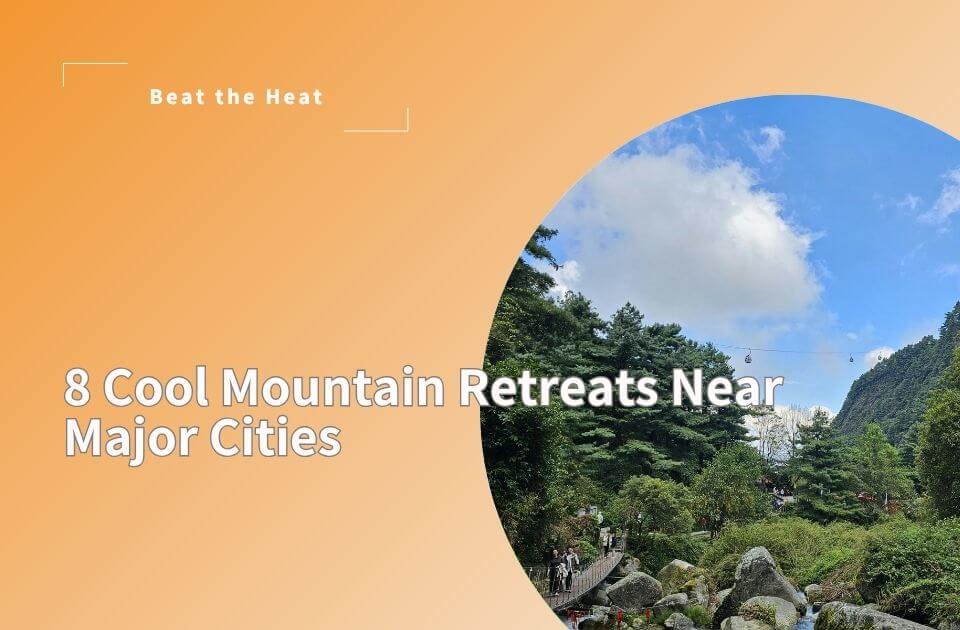
I love summer in Japan. The festivals, the food, the energy. But I will not pretend the heat is comfortable. July and August in Tokyo, Osaka, and Kyoto bring temperatures above 35 degrees Celsius with humidity so thick you can practically swim through the air. After my first July in Tokyo, I made a personal rule: at least one mountain escape every summer. It has saved my sanity every year since.
The beautiful thing about Japan is that mountains are never far away. Within a few hours of any major city, you can drop the temperature by 5 to 10 degrees and trade concrete for forest. Here are eight mountain retreats that I have personally escaped to when the cities become unbearable.
1. Kamikochi, Nagano Prefecture (From Nagoya/Tokyo)
Kamikochi is my number one recommendation for anyone who wants to see the Japanese Alps without being a serious mountaineer. Sitting at about 1,500 meters above sea level in the Northern Alps, Kamikochi is a flat river valley surrounded by towering peaks, and the summer temperatures hover around 20 to 25 degrees Celsius while the cities below roast.
Private cars are banned from Kamikochi, which keeps it peaceful. You take a bus from either Takayama or Matsumoto. From Matsumoto, it is about 90 minutes by bus and costs around 2,500 yen round trip from Shin-Shimashima Station. From Tokyo, take the Azusa limited express to Matsumoto (about 2.5 hours, around 6,600 yen one way), then transfer.
The Kappa Bridge is the iconic photo spot, but I prefer walking along the Azusa River toward Myojin Pond, about a 60-minute easy walk from the bus terminal. The water is so clear it looks artificial. There is a small shrine at Myojin with a teahouse where you can eat freshly grilled iwana, a mountain char fish, for about 800 yen. It is one of my favorite meals in Japan.
You can do Kamikochi as a day trip, but staying overnight at one of the mountain lodges is magical. Nishi-Itoya Mountain Lodge offers rooms from about 10,000 yen per person with meals.
2. Hakone, Kanagawa Prefecture (From Tokyo)
Hakone is the classic Tokyo escape, and for good reason. It is only 85 minutes from Shinjuku on the Odakyu Romance Car (about 2,330 yen), and once you arrive, the air immediately feels different. The town sits between 300 and 800 meters elevation depending on where you go, and the combination of altitude and forest cover drops the temperature noticeably.
Most people know Hakone for its hot springs and the views of Mount Fuji, but in summer I go specifically for the Hakone Open-Air Museum (1,600 yen admission) and the forested hiking trails around Lake Ashi. The Old Tokaido Road cedar avenue between Moto-Hakone and Hakone-Yumoto is a beautiful shaded walk that feels 10 degrees cooler than anywhere in Tokyo.
The Hakone Free Pass (6,100 yen for two days from Shinjuku) covers the Romance Car, buses, the cable car, the ropeway, and the pirate ship on Lake Ashi. It is genuinely good value if you plan to explore the whole loop route.
3. Mount Koya (Koyasan), Wakayama Prefecture (From Osaka)
Koyasan is a mountaintop temple town at about 800 meters elevation, and it is one of the most spiritually powerful places I have visited in Japan. The complex of over 100 temples sits in a basin surrounded by eight peaks, and the ancient cedar forest that covers the area creates a natural coolness that feels like air conditioning.
From Osaka’s Namba Station, take the Nankai Railway to Gokurakubashi (about 90 minutes, around 1,700 yen), then the cable car up to Koyasan (about 5 minutes, around 400 yen). A one-day bus pass on the mountain costs 840 yen.
The must-do experience is staying overnight in a shukubo, a temple lodging. You sleep in tatami rooms, eat vegetarian Buddhist cuisine called shojin ryori, and join the morning prayer service. Prices range from about 10,000 to 20,000 yen per person with two meals. Eko-in temple is my recommendation because their nighttime guided walk through Okunoin Cemetery is unforgettable. Walking among 200,000 mossy tombstones under towering cedars with only lantern light is the kind of experience that changes how you think about travel.
4. Karuizawa, Nagano Prefecture (From Tokyo)
Karuizawa has been Tokyo’s favorite summer escape since the Meiji era, when foreign missionaries first discovered that this plateau town at 1,000 meters elevation was blissfully cool while Tokyo sweltered. Today it is still the go-to weekend retreat for Tokyoites, and the Hokuriku Shinkansen gets you there from Tokyo Station in just 65 minutes (about 5,500 yen).
The town has a slightly resort-like feel with outlet malls and cafes, but venture beyond the main street and you will find gorgeous cycling paths through birch forests and moss-covered shrines. I rent a bicycle from the shop near the station for about 1,000 yen per day and ride out to Shiraito Falls, a delicate curtain of water about 30 minutes by bike from town. The temperature near the falls feels at least 5 degrees cooler than even Karuizawa’s already pleasant baseline.
For food, Karuizawa has an unusually good bakery and cafe scene. The Sawaya Jam shop has been making fruit preserves here since 1952, and their jam on fresh bread is a local institution. A jar costs about 700 to 1,200 yen.
5. Mount Rokko, Hyogo Prefecture (From Osaka/Kobe)
At 931 meters, Mount Rokko overlooks Kobe and Osaka Bay, and on clear days the view stretches all the way to the Akashi Kaikyo Bridge. But for summer visitors, the main attraction is that it is a good 5 to 7 degrees cooler than the cities below.
From Kobe, take the Rokko Cable Car from Rokko Cable Shita Station (about 600 yen one way, 10 minutes). Once on top, the Rokko Garden Terrace is a pleasant complex with restaurants, shops, and a viewing platform. In summer, the Rokko Alpine Botanical Garden (700 yen admission) showcases about 1,500 species of mountain plants, and the shaded forest paths are a genuine relief from the Kansai heat.
My pro tip: go in the evening. The Rokko-Shidare Observatory stays open until 9 PM in summer, and the night view of Kobe’s lights from Rokko is considered one of the top three night views in Japan. Pair it with dinner at one of the mountaintop restaurants and you have the perfect summer evening.
6. Togakushi, Nagano Prefecture (From Nagano City)
Togakushi is one of the most underrated destinations in Japan. Located about an hour by bus from Nagano City (about 1,500 yen round trip), this highland area at 1,200 meters sits in the shadow of the dramatic Togakushi mountain range and is home to one of the most atmospheric shrine complexes in the country.
The walk to Togakushi Okusha, the innermost shrine, takes you along a two-kilometer path lined with 400-year-old cedar trees. On a summer morning, the light filtering through the canopy and the cool mountain air make this one of the most meditative walks in Japan. It is free, it is beautiful, and somehow it is not overrun with tourists.
Togakushi is also famous for its soba noodles, made with locally grown buckwheat and mountain spring water. Uzuraya is the most well-known restaurant, and their botchi soba, served on bamboo baskets in small bundles, costs about 1,050 yen. The line can be long, especially on weekends, so arrive early.
7. Kibune and Kurama, Kyoto Prefecture (From Central Kyoto)
You do not even need to leave Kyoto Prefecture for a mountain escape. Kibune and Kurama are twin villages in the mountains north of the city, about 30 minutes by Eizan Railway from Demachiyanagi Station (about 420 yen).
Kibune is famous for kawadoko dining in summer, where restaurants build platforms directly over the Kibune River and you eat while cool water rushes beneath your feet. The most popular dish is nagashi somen, where noodles flow down a bamboo chute and you catch them with chopsticks. A kawadoko lunch course at one of the riverside restaurants runs about 5,000 to 8,000 yen, and the temperature beside the river is noticeably cooler than central Kyoto.
If you want to combine it with a hike, the trail from Kurama-dera Temple over the mountain to Kibune takes about 90 minutes and passes through dense cedar forest. Kurama-dera charges 300 yen admission. Start from the Kurama side and hike down to Kibune, then reward yourself with a riverside lunch.
8. Nikko, Tochigi Prefecture (From Tokyo)
Nikko sits at about 600 meters elevation in the mountains north of Tokyo, and while most visitors come for the ornate Toshogu Shrine, I think Nikko truly shines as a summer escape. The Tobu Railway limited express from Asakusa Station takes about two hours and costs about 2,800 yen.
Beyond the famous shrine, the area around Lake Chuzenji and Kegon Falls is where the real mountain coolness lives. A bus from Nikko Station climbs the winding Irohazaka switchback road to the lake area (about 1,200 yen, 50 minutes), and the temperature up there can be 8 to 10 degrees cooler than Tokyo. Kegon Falls has an elevator that takes you to an observation platform at the base of the 97-meter waterfall for 570 yen, and the mist alone is worth the trip on a hot day.
The Senjogahara Marshland trail near Lake Chuzenji is a flat, easy boardwalk hike through a highland wetland that takes about two hours. It is not strenuous, the scenery is gorgeous, and you will barely see anyone on a weekday.
Making It Work: Quick Planning Tips
For day trips, check limited express trains and shinkansen schedules to maximize your time. Most of these destinations are reachable by late morning if you leave the city by 8 or 9 AM.
For overnight stays, mountain lodges and ryokan often book up on summer weekends, so reserve at least a few weeks ahead. Weekday visits are almost always better in terms of both availability and crowds.
Pack layers. Mountain areas can drop to 15 degrees Celsius in the evening even in August, which feels like a miracle after weeks of 35-degree city heat, but it can catch you off guard if you only packed for summer.
When the heat gets to be too much, do not push through it. Get on a train, head for the mountains, and give yourself a day to breathe. Japan’s cities are wonderful, but the mountains are where the country refreshes your soul. Go find out for yourself.
Follow Japan is your insider guide to experiencing Japan like a local. Follow @followjapan_fj on Instagram for daily Japan travel tips and hidden gems.


