
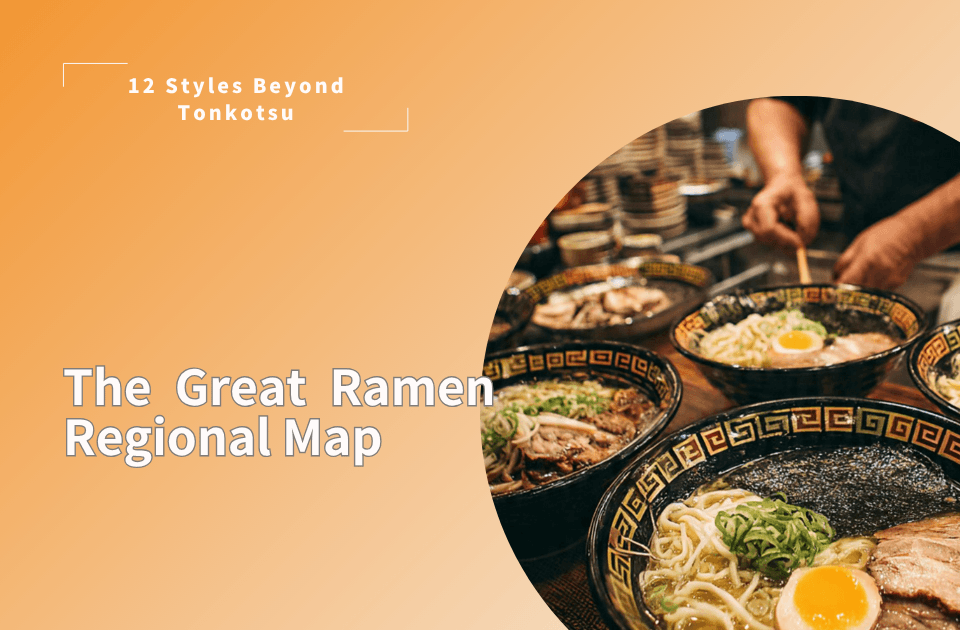
I once watched a visitor in Kyoto scan a ramen shop’s menu, frown, and ask, “Where’s the normal ramen?” It is the most understandable mistake in Japanese food. Most of the world learned ramen through tonkotsu, the creamy pork-bone style that conquered New York and London, and assumes that is what ramen means. But tonkotsu is one regional dialect of a language with dozens. Japan has spent a century evolving distinct ramen styles city by city, each shaped by local climate, ingredients, and stubbornness. Here is a map of twelve styles worth traveling for, from the snow country to the southern islands.
The North: Ramen Built for Winter
1. Sapporo miso. Hokkaido’s capital invented miso ramen, and it remains the definitive cold-weather bowl: fermented soybean paste stir-fried with ginger and garlic, married to pork broth, topped with bean sprouts and often sweet corn and a melting pat of Hokkaido butter. The fat layer keeps it volcanically hot, which makes sense at minus ten degrees. The old Ganso Ramen Yokocho alley in Susukino is touristy but atmospheric; locals will point you to bigger names elsewhere in the city.
2. Asahikawa shoyu. Two hours north, Asahikawa answers with soy sauce: a double broth of pork bones and dried seafood under a protective slick of lard, with firm wavy noodles. It is subtler than Sapporo’s punch and beloved by broth purists.
3. Hakodate shio. The port city completes Hokkaido’s trinity with the lightest style: clear salt broth, straight noodles, elegant and almost consommé-like. Proof that Hokkaido does delicate as well as it does hearty.
The East: Soy Sauce Heartland and Its Rebels
4. Kitakata. This small Fukushima town has one of the highest ramen-shop densities in Japan and a proud morning-ramen culture, with shops full at 7am. The style: flat, wide, curly noodles with a springy chew, in a light soy broth built on pork bones and dried sardines. Worth the detour on any Tohoku itinerary.
5. Tokyo shoyu. The capital’s classic: clear soy-tinted chicken and pork broth, medium wavy noodles, bamboo shoots, a slice of chashu, the template most Japanese people picture when they hear “ramen.” The old-school shops around Ogikubo and the refined modern versions that have earned Michelin stars are two ends of the same lineage.
6. Yokohama iekei. Born at a single Yokohama shop in 1974, iekei crosses tonkotsu richness with soy sauce sharpness, served with thick noodles, spinach, and sheets of nori. The ritual is half the fun: you specify noodle firmness, fat level, and seasoning strength, then use the nori to wrap rice dipped in broth. Now spread nationwide, but the pilgrimage is to Yokohama.
7. Tsukemen. Tokyo’s great modern invention: thick cold noodles served beside a separate bowl of intensely concentrated dipping broth, often pork-and-fish, finished by diluting the broth with hot soup to drink. A summer style that long ago broke the seasonal barrier.
The West: Umami Experiments
8. Kyoto kotteri. Kyoto, city of delicate kaiseki, perversely loves some of Japan’s heaviest ramen: opaque chicken-based broths so thick they coat the spoon. One famous chain built an empire on it, but the independent shops along the student corridors of Ichijoji are the real destination, and a fine excuse to visit a neighborhood tourists skip.
9. Wakayama chuka soba. South of Osaka, Wakayama blends tonkotsu and soy into a brown, balanced broth. The local custom: help yourself to early-pickled mackerel sushi stacked on the table while you wait, then tell the staff how many you ate at payment. Trust-based appetizers with your noodles.
10. Onomichi. This lovely port town on the Seto Inland Sea floats chunks of local pork back fat on a soy-and-seafood broth that leans on the little fish of the Inland Sea. Eat it after the temple walk and before the Shimanami Kaido cycling route, and it may be the best-situated bowl in Japan.
The South: Pork Bone Country
11. Hakata tonkotsu. The world-conqueror, at home in Fukuoka: milky broth from pork bones boiled at a rolling gallop for days, ultra-thin straight noodles you order by firmness, and the kaedama system of noodle refills into your remaining broth. Eat it at a yatai street stall along the river at night for the full experience, red pickled ginger and sesame within arm’s reach. Nearby Kurume claims the style’s invention and serves a funkier, more intense version for the committed.
12. Kagoshima. At Kyushu’s southern tip, the tonkotsu is gentler, often sweetened with chicken broth and vegetables, served with pickled daikon on the side. A softer landing than Hakata’s intensity, in a city with volcano views.
Honorable Mentions for the Obsessed
Twelve styles is a starting lineup, not the whole league. Toyama Black, along the Sea of Japan coast, serves an inky, pepper-heavy soy broth originally built to season rice for laborers, and it is as intense as it looks. Nagoya’s Taiwan ramen, invented in Nagoya and not Taiwan, piles chili-fried minced pork on a fiery broth and spawned its own genre of imitators. Tokushima on Shikoku crowns a sweet-savory brown pork broth with a raw egg and belly meat, closer to sukiyaki than soup. Muroran and Kushiro fill out Hokkaido’s deep bench, and Okinawa’s soba, though technically a different noodle family entirely, earns a bowl on any southern itinerary. The joy of the ramen map is that it never actually ends; every prefecture keeps a local answer to the question, and the shop with the faded awning near the station usually has the best one.
How to Eat Your Way Down the Map
Some practical notes from years of dedicated fieldwork. Most shops run on ticket machines by the door: pay first, hand over the ticket, add customizations verbally. Slurping is correct, waiting queues move fast, and lingering after finishing is not really done at busy shops, since a bowl is a twenty-minute experience. Prices have crept up but remain one of Japan’s great bargains: 900-1,300 yen for a standard bowl, a few hundred more for the deluxe version with extra chashu and a seasoned egg. Vegetarians should search out the growing number of dedicated plant-based ramen shops in Tokyo and Kyoto rather than hoping at random doors, since nearly all traditional broths involve pork, chicken, or fish. And if you only have one trip: pick three styles from three regions rather than five shops in one city. The distances between bowls are where the ramen map actually comes alive, and Japan’s rail network makes noodle pilgrimage absurdly easy.
Quick tips:
・Buy the meal ticket first; point at the top-left button if overwhelmed, it is usually the house classic
・Kaedama (noodle refill) is a Hakata custom; save broth if you want a second round
・Morning ramen is real in Kitakata; ramen for breakfast is a traveler’s rite of passage
・Regional styles cluster near their home stations, so even a transfer stop can be a tasting stop
・A 1,000-yen bowl at a counter with six seats will beat most 3,000-yen meals of your trip
Tonkotsu was just your first word. The rest of the language is waiting at the end of a train line, and it is delicious from Hokkaido to Kagoshima.
Eating your way through Japan? Follow @followjapan_fj on Instagram for a new food guide every week.


